LookFindr Mobile Apps
YEAR:
2024 - 2025
CLIENT:
LookFindr (Saudi Arabia Beauty Market)
ROLE:
Senior Product Designer (Lead UX/UI, System Strategy, A/B Testing)
INDUSTRY:
Beauty & Wellness / SaaS Ecosystem
EXPERIENCE:
iOS & Android (Consumer & Staff)
Reading Time: 9 Minutes
Scanning Time: 2-3 Minutes
Luxury is often defined by what you don’t see.
Behind every seamless spa day or high-end haircut is a high-stakes dance of shifting schedules, staff availability, and thin margins. As the Lead Product Designer for LookFindr, my challenge wasn't just to design a booking interface—it was to build the choreography for an entire industry.
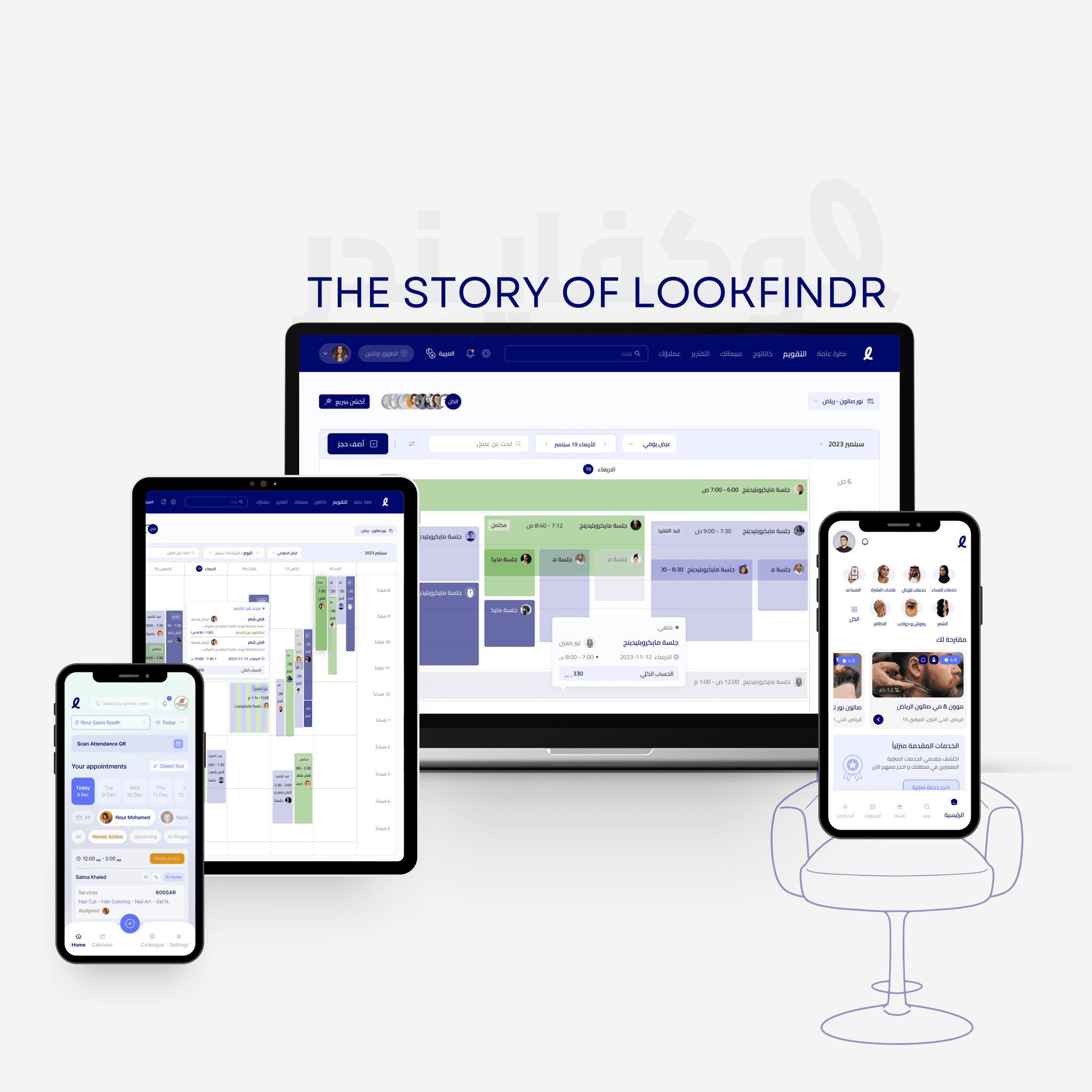
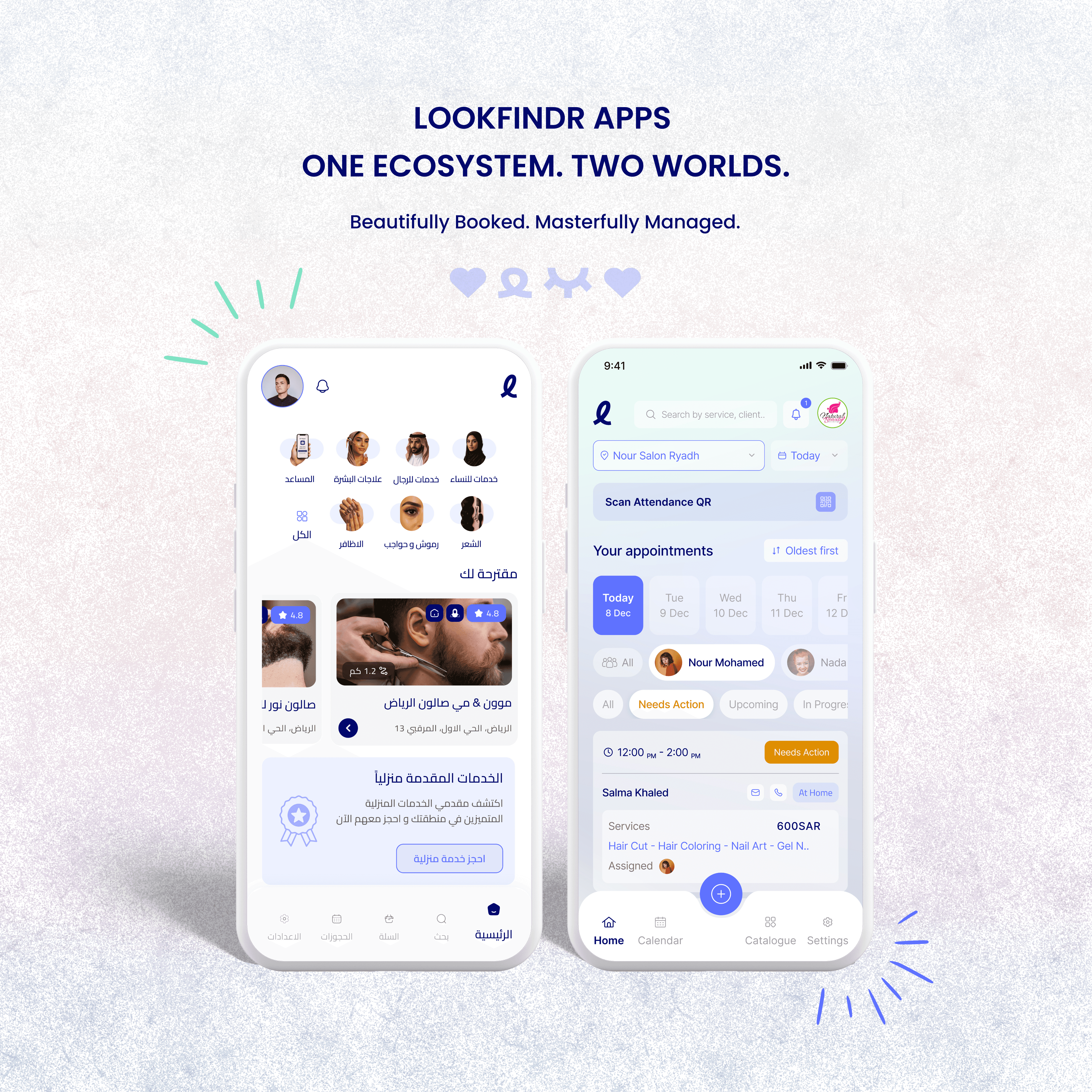
I viewed this project as the design of two distinct worlds that breathe together:
The Consumer App: The "Front of House." A polished, high-end window designed for inspiration, where complex service bundles are booked in seconds.
The Staff App: The "Engine Room." A high-velocity handheld CRM that turns the chaos of "Staff Tetris" into a perfectly synced workflow.
1st: Orchestrating "Quiet Luxury" in a High-Friction Industry
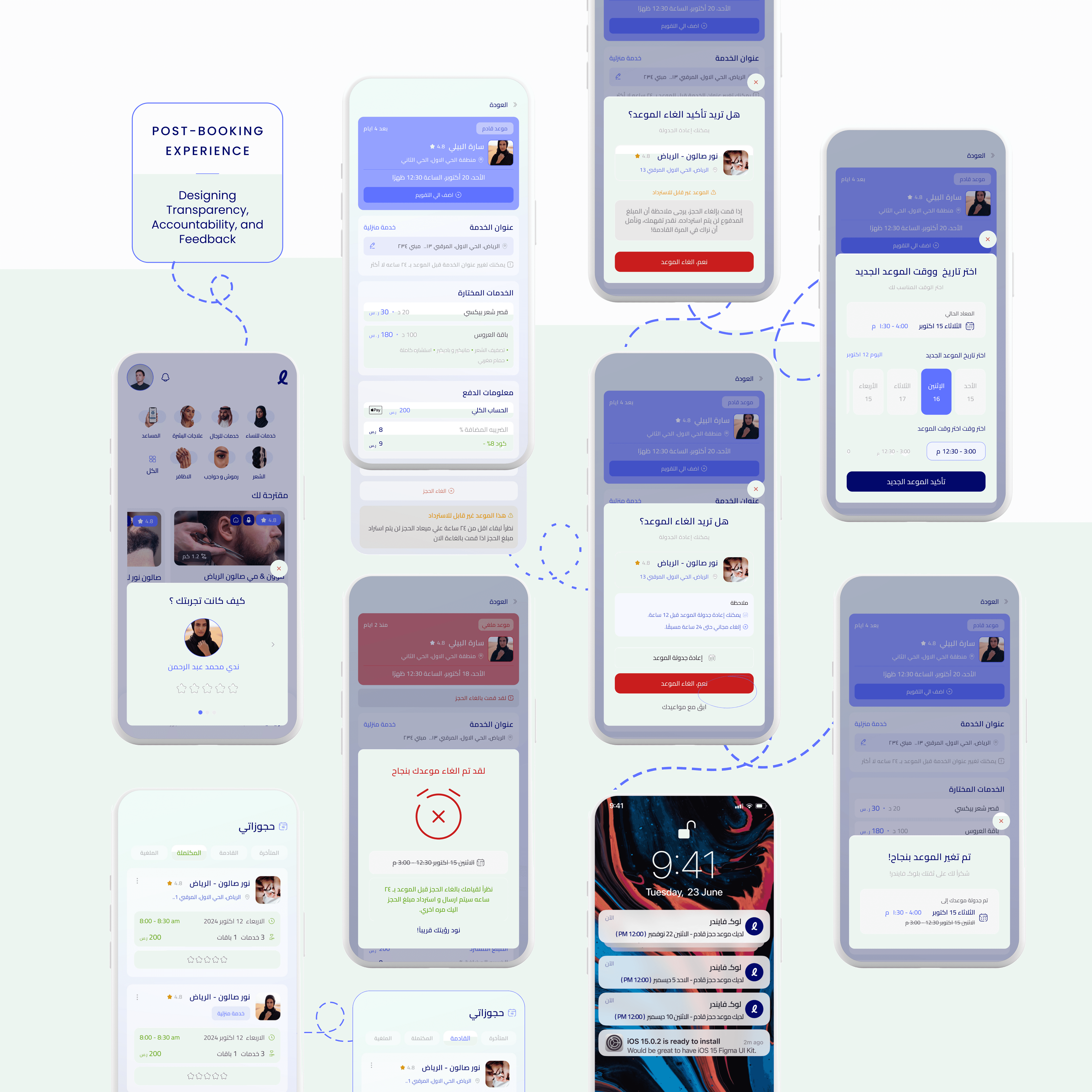
In the world of high-end beauty, the user experience usually begins with a "broken" interaction. A client finds a style they love on Instagram, but then the friction starts: playing "calendar tetris" over the phone, waiting on hold, and trying to coordinate multiple services across different stylists.
My mission for the LookFindr Client App was to eliminate this "logistical noise." I wanted to create a concierge in your pocket—an experience that felt as premium as the salon chair itself, turning a fragmented 10-minute process into a seamless, 3-tap confirmation.

Navigating the Paradox of Choice
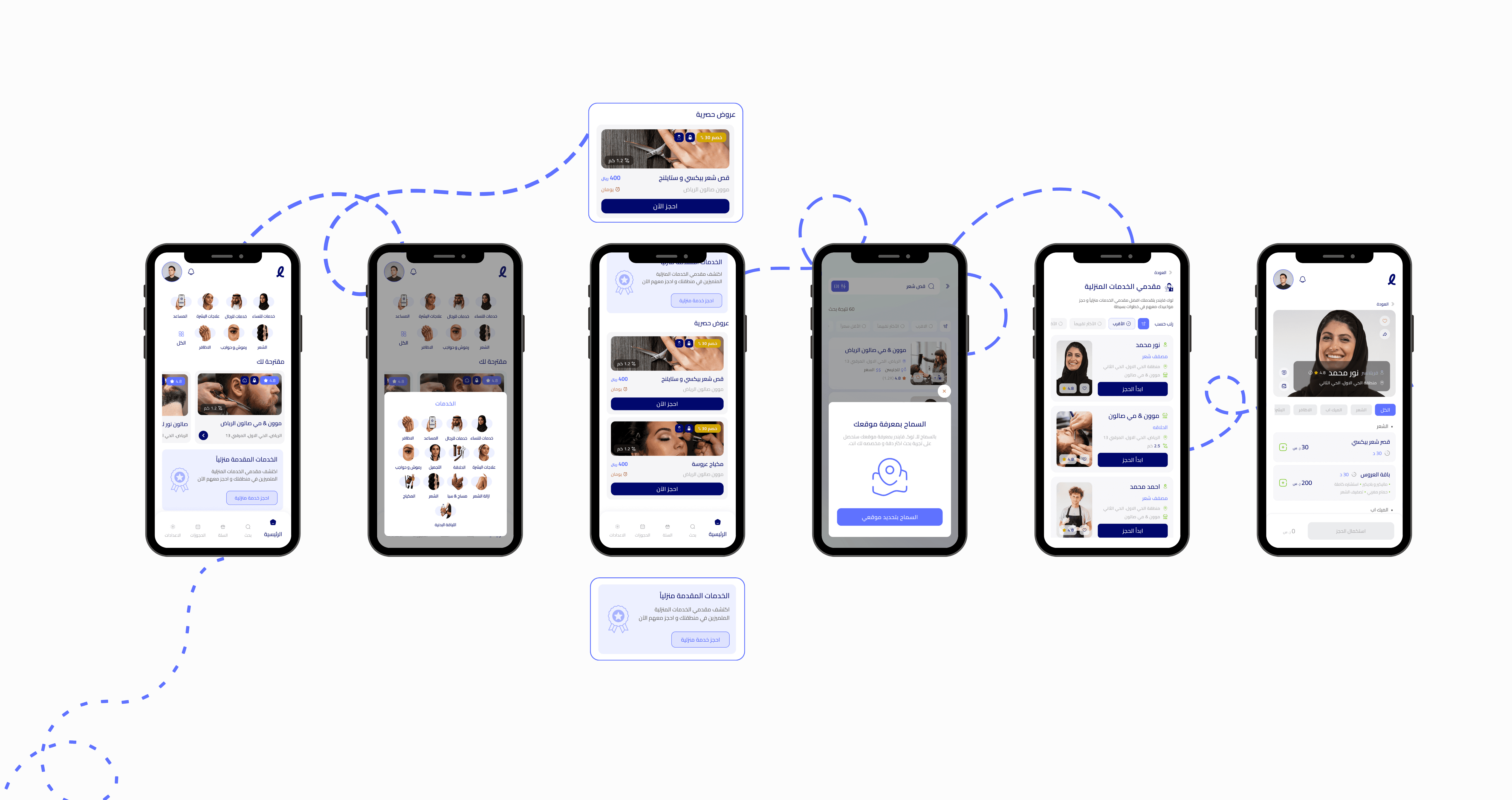
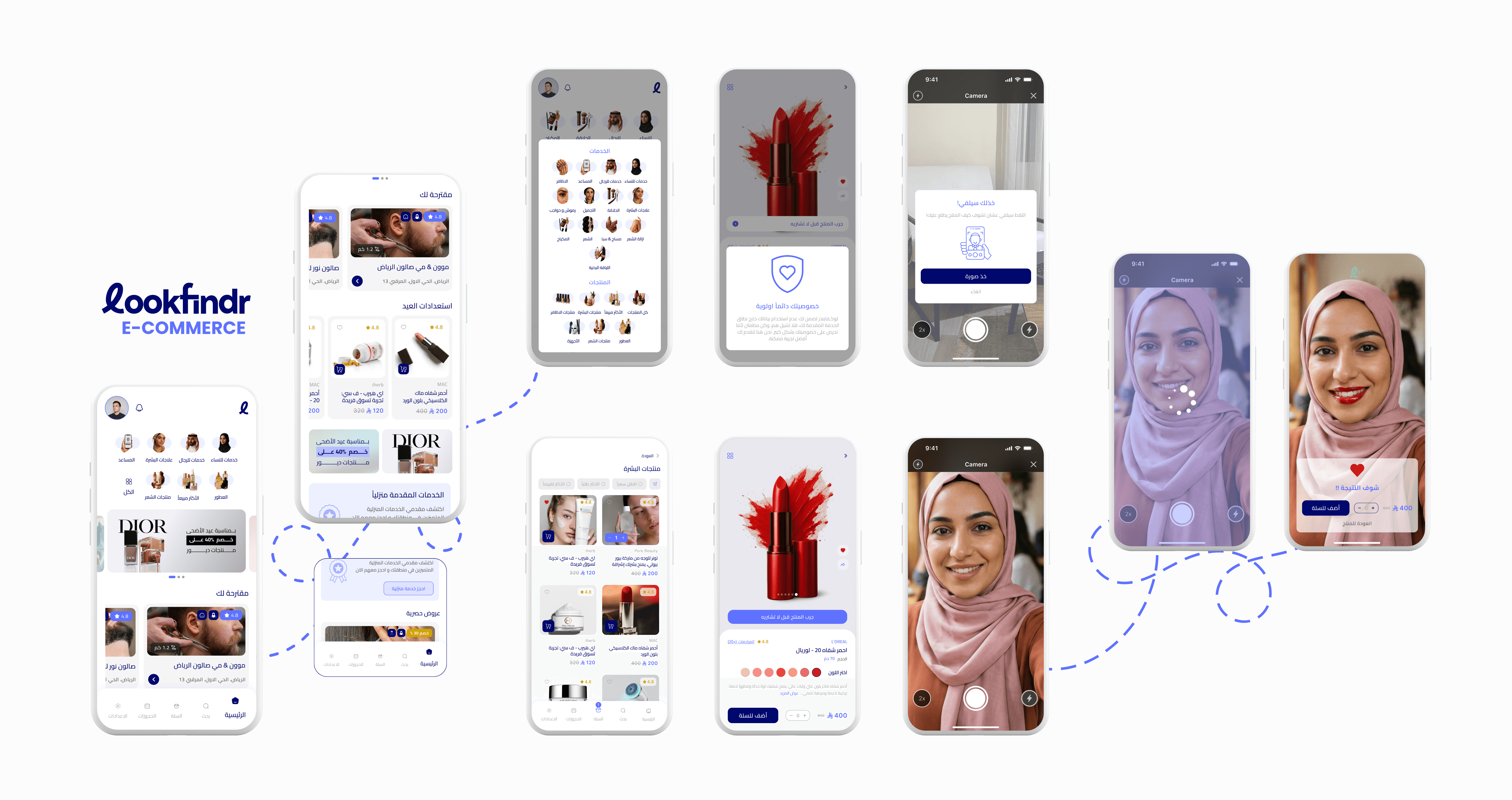
The first challenge was the Discovery Architecture. If you give a user too many options without a path, they book nothing.
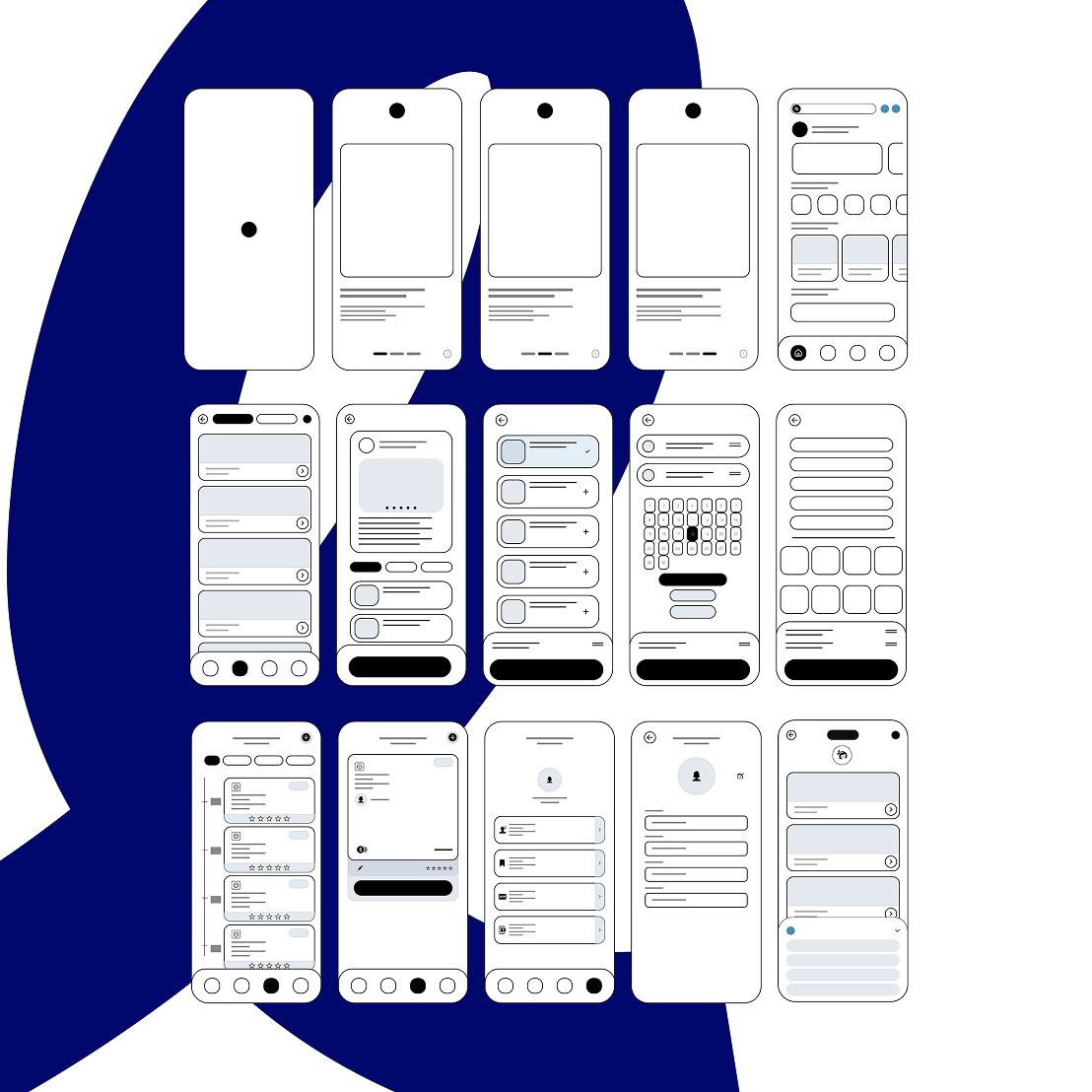
I approached the Information Architecture as a "guided discovery" rather than a directory, catering to three distinct user "moods."
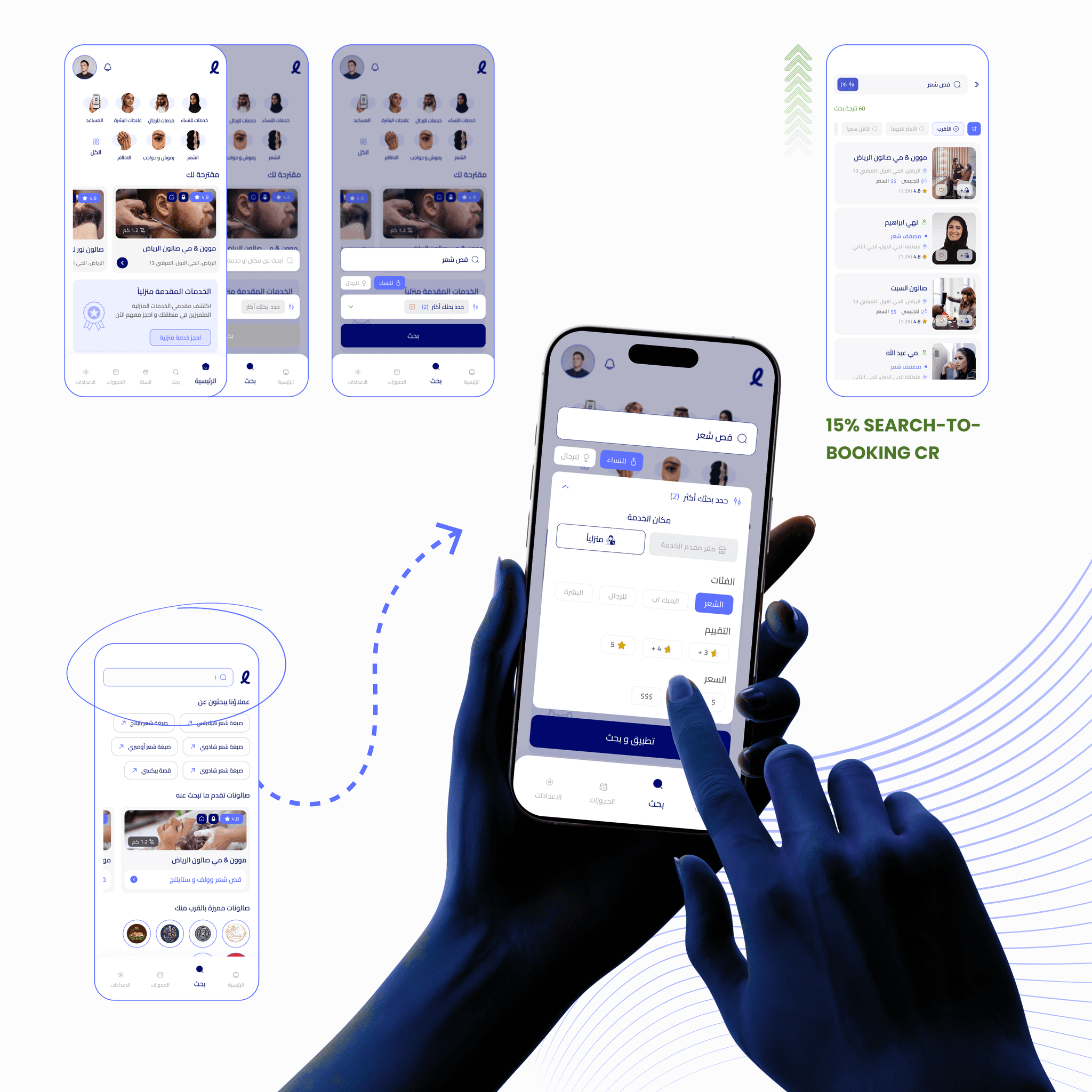
From the outset, my vision for the search experience was a Contextual Bottom-Nav Overlay. I wanted to keep the user "in the room", allowing them to refine their results without the psychological burden of leaving the home screen. However, to rigorously validate this intuition against traditional industry patterns, we developed a secondary, full-page search interface for a head-to-head A/B test
The data was clear: the overlay variant produced a 15% higher search-to-booking conversion rate, proving that maintaining user context is a critical driver for engagement in a high-end marketplace.
Designing for Two Mindsets: The "Browser" vs. The "Booker"
"Zero-Gap" Booking Engine
Turning "Staff Tetris" into a One-Tap Experience
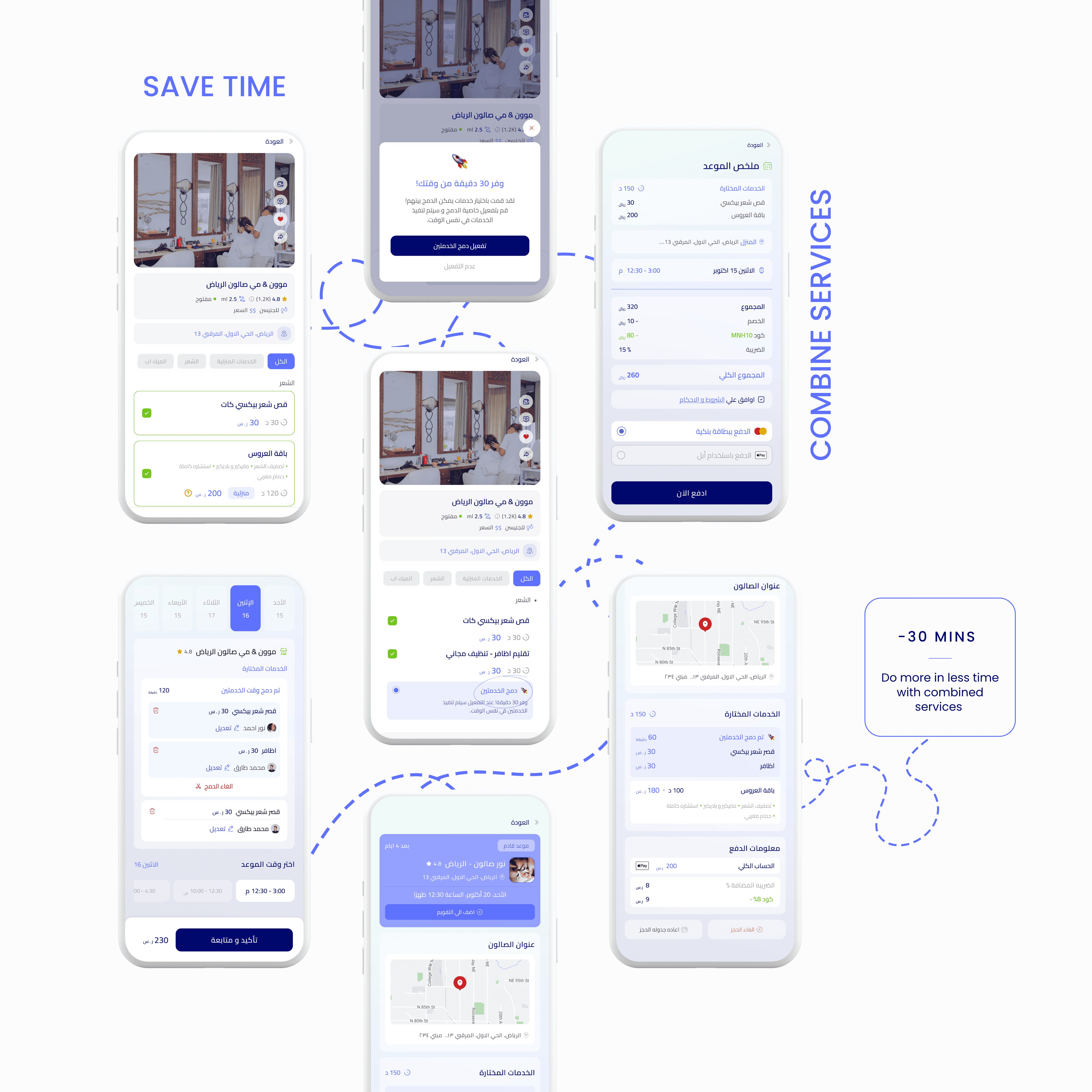
The biggest friction in beauty booking is Multi-Service Appointments (e.g., Hair + Nails + Massage). If not managed correctly, these create "dead gaps" which lead to lost revenue that can never be recovered!
Sequential Availability
I collaborated with the engineering team to move away from "open calendars" toward a Sequential Filter.
The Anchor: The first service selected sets the start time.
The Handshake: For every additional service, the UI only displays time slots and stylists that fit immediately before or after the first selection.
The Result: No fragmented 15-minute gaps. Every multi-service booking is a solid, "Zero-Gap" block of productivity.
The UX Solution: "LookFindr Choice"
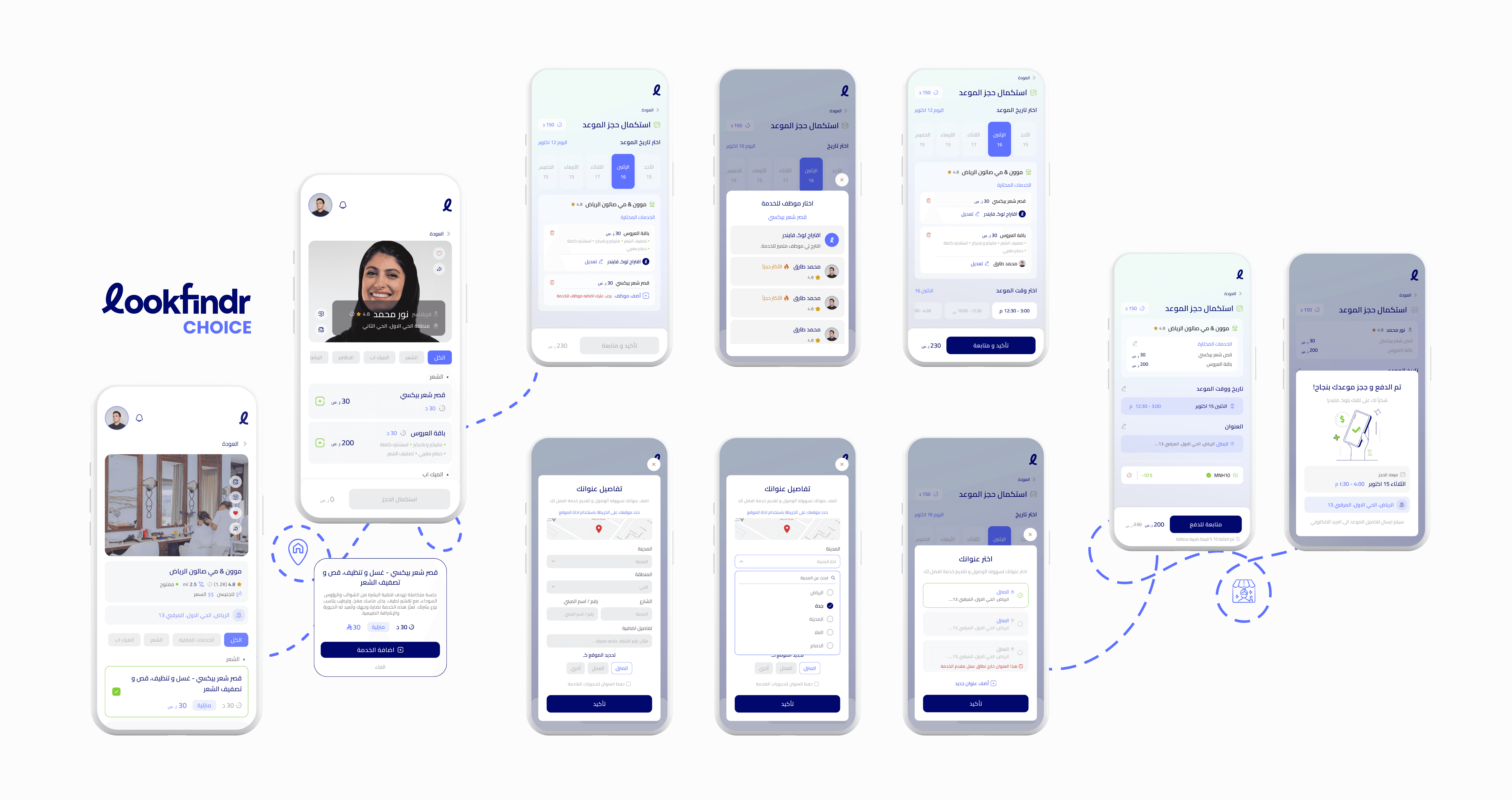
To prevent "Decision Fatigue" (the stress of picking 3 different stylists for 3 services), I designed LookFindr Choice as the smart default.
The Problem: Users hate playing "Staff Tetris" to find a time that works for everyone.
The Solution: A "Smart Default" that automatically calculates the fastest possible path to completion using available staff.
The Impact: 70% of users chose this one-tap solution over manual selection, drastically reducing checkout drop-off.
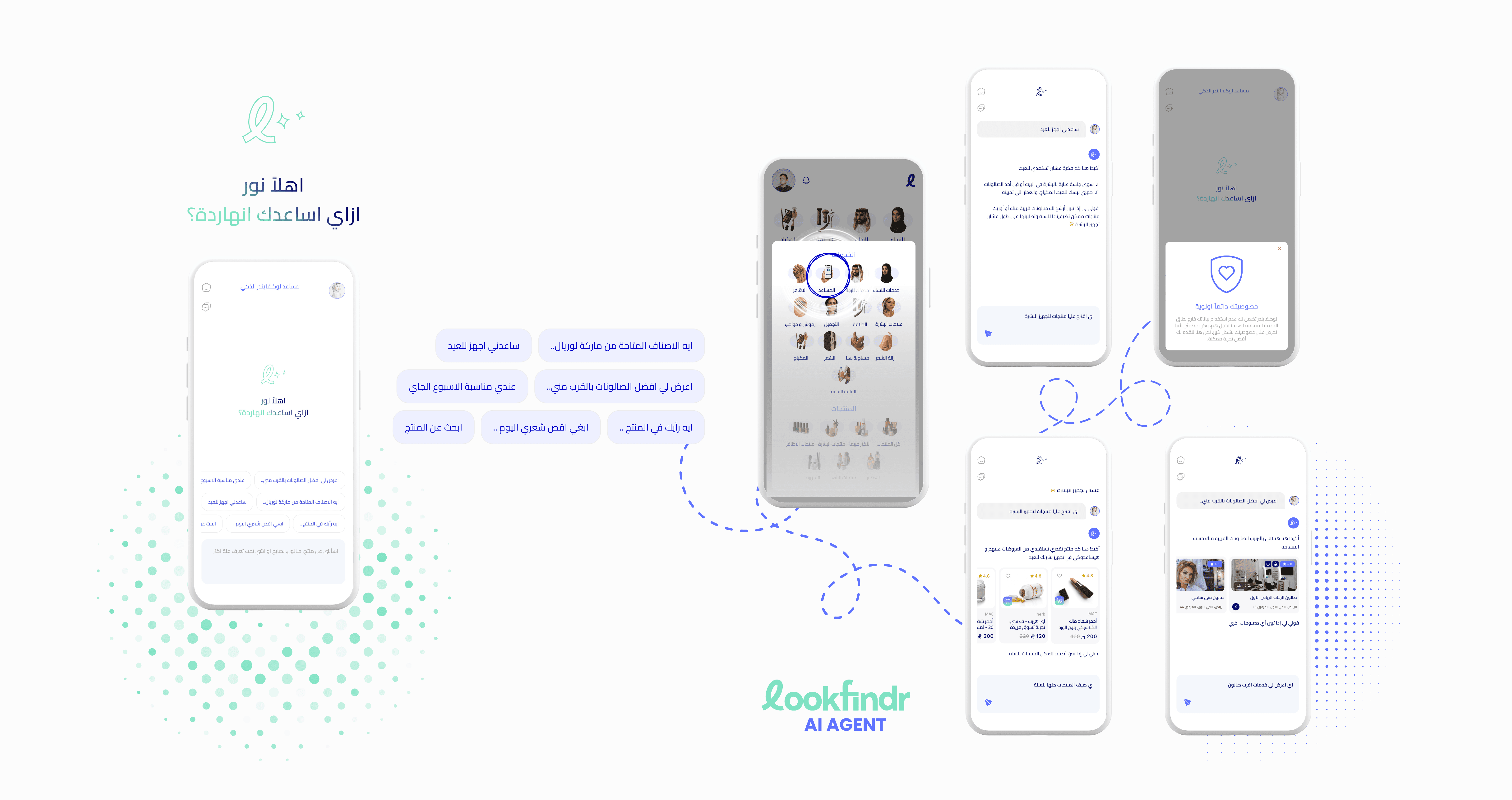
The Intelligence Layer
Part II: The Staff Handheld CRM
Bridging Operational Complexity with Mobile Precision
If the consumer app is the dream, the Staff App is the reality. It’s where appointments are fought for, schedules are optimized, and business happens in real-time. I designed this as a High-Utility CRM that lives in the pocket of every team member—built to be used with one hand, in a rush, and with zero room for error.
I designed the app with two distinct "mental models" for how staff interact with their day:
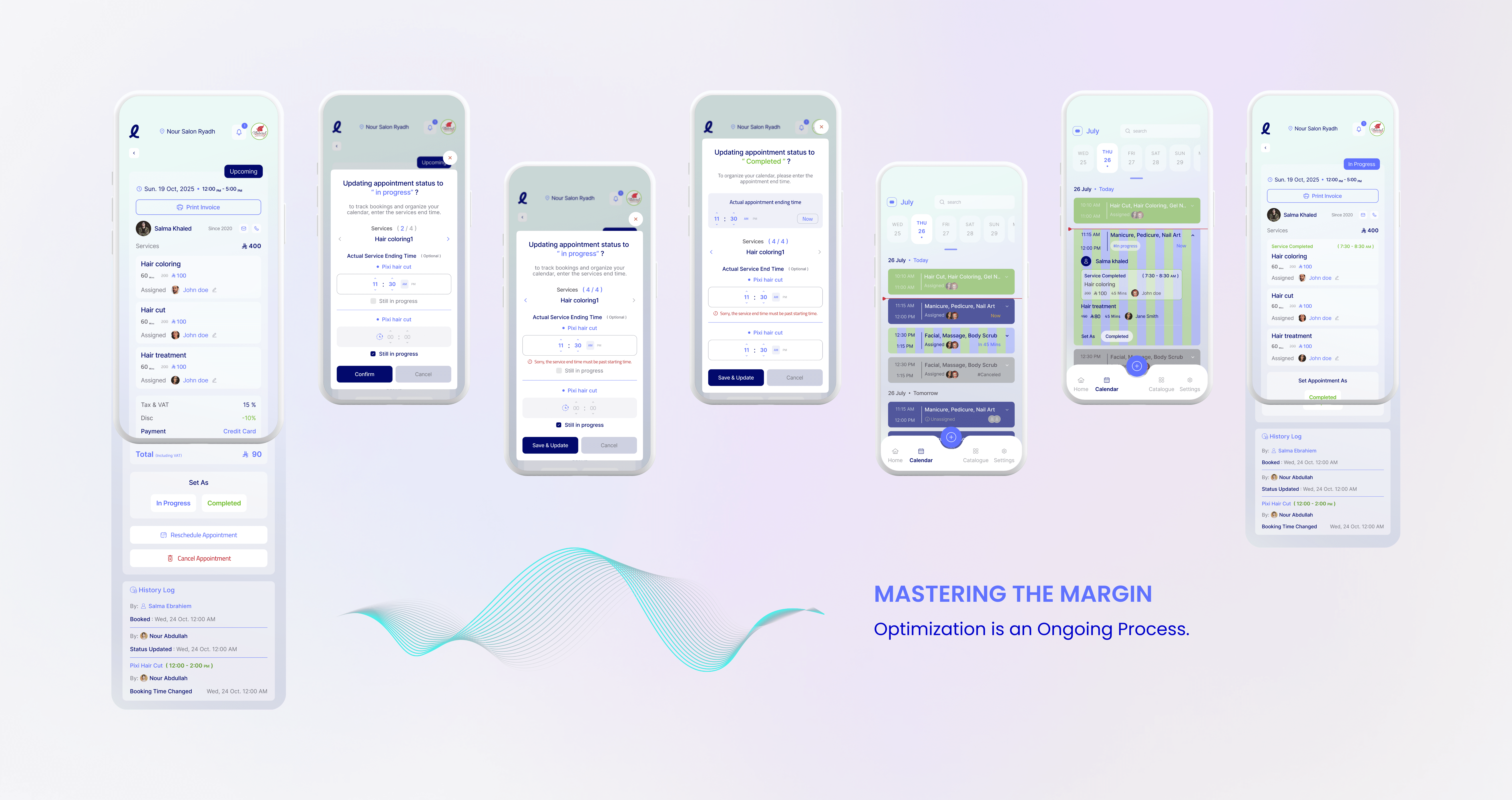
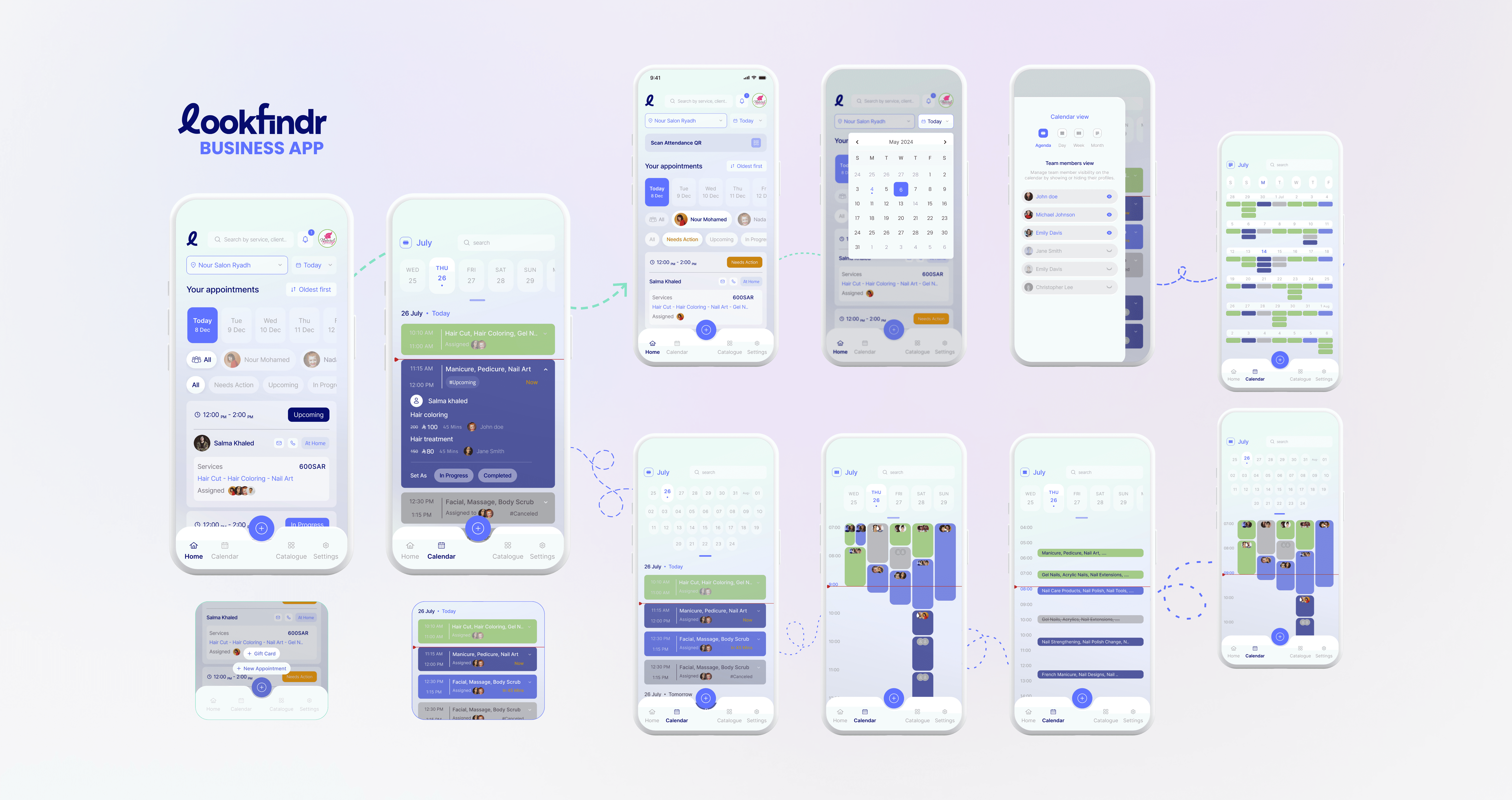
The Status-First Dashboard (The "Home"): This is the immediate "To-Do List." I categorized the day into Needs Action, Upcoming, In Progress, and Completed. It’s designed so a member can glance at their screen and know instantly where they need to be.
The Master Calendar (The "Engine"): For deeper planning, I built a robust, color-coded calendar with Day, Week, and Month views. It’s not just a grid; it’s a map of the salon’s life, featuring member profile avatars and status-based colors that allow anyone to "read the room" in three seconds.
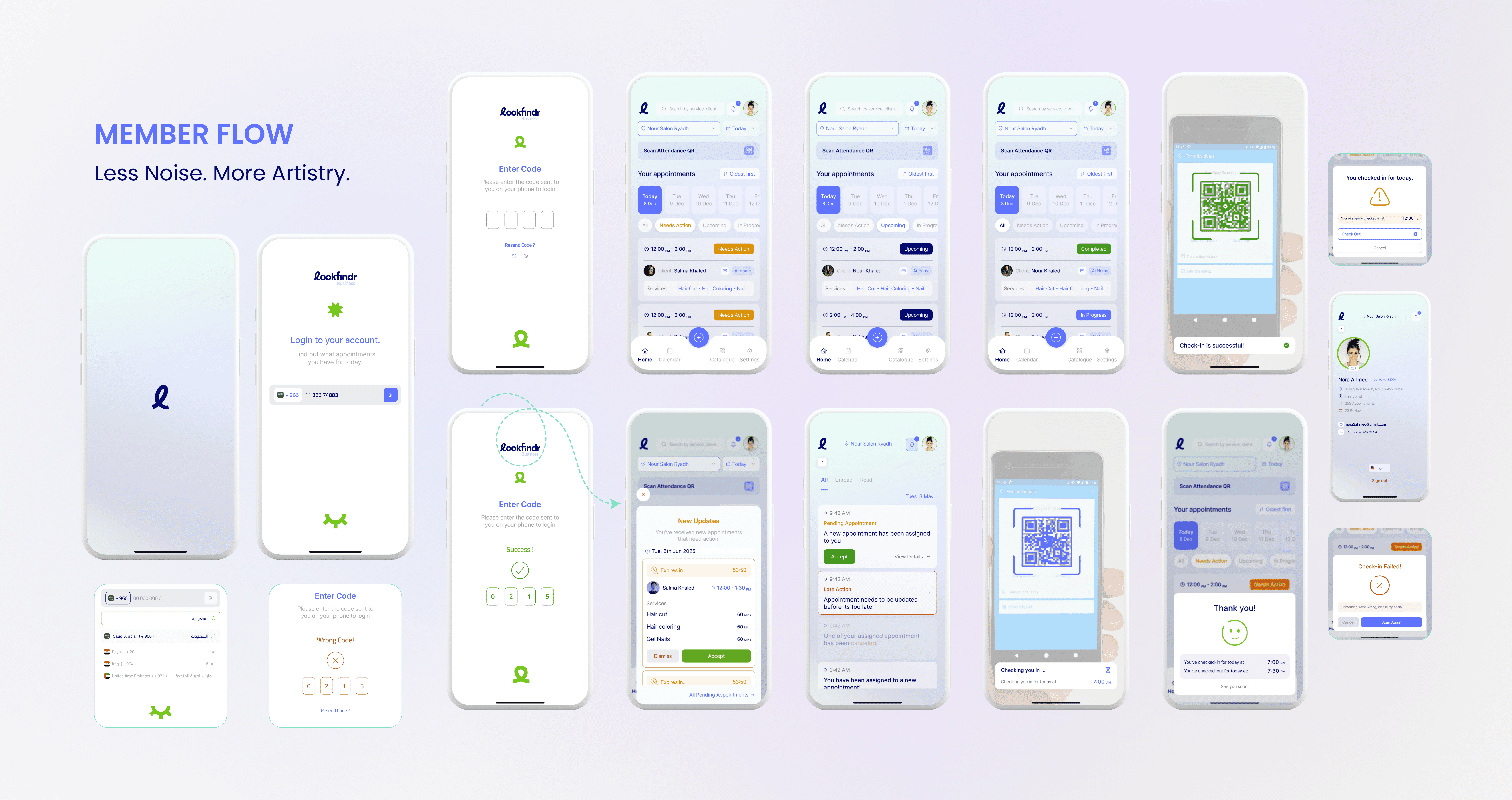
A senior-level CRM must respect permissions. I designed two parallel experiences that keep everyone focused:
The Owner’s Command: The owner sees everything. I implemented a global Member Slider at the top of the dashboard, allowing them to filter by "All Members" or drill down into a specific stylist's day. They are the "Final Arbiter," calling clients, rescheduling for the whole team, and managing the Service Catalogue that staff can't see.
The Member’s Focus: For the stylist, the noise is stripped away. They see their list and their appointments. This prevents the "Decision Fatigue" of a busy salon and keeps them focused on the client in their chair.
The "Needs Action" Engine: Proactive Problem Solving
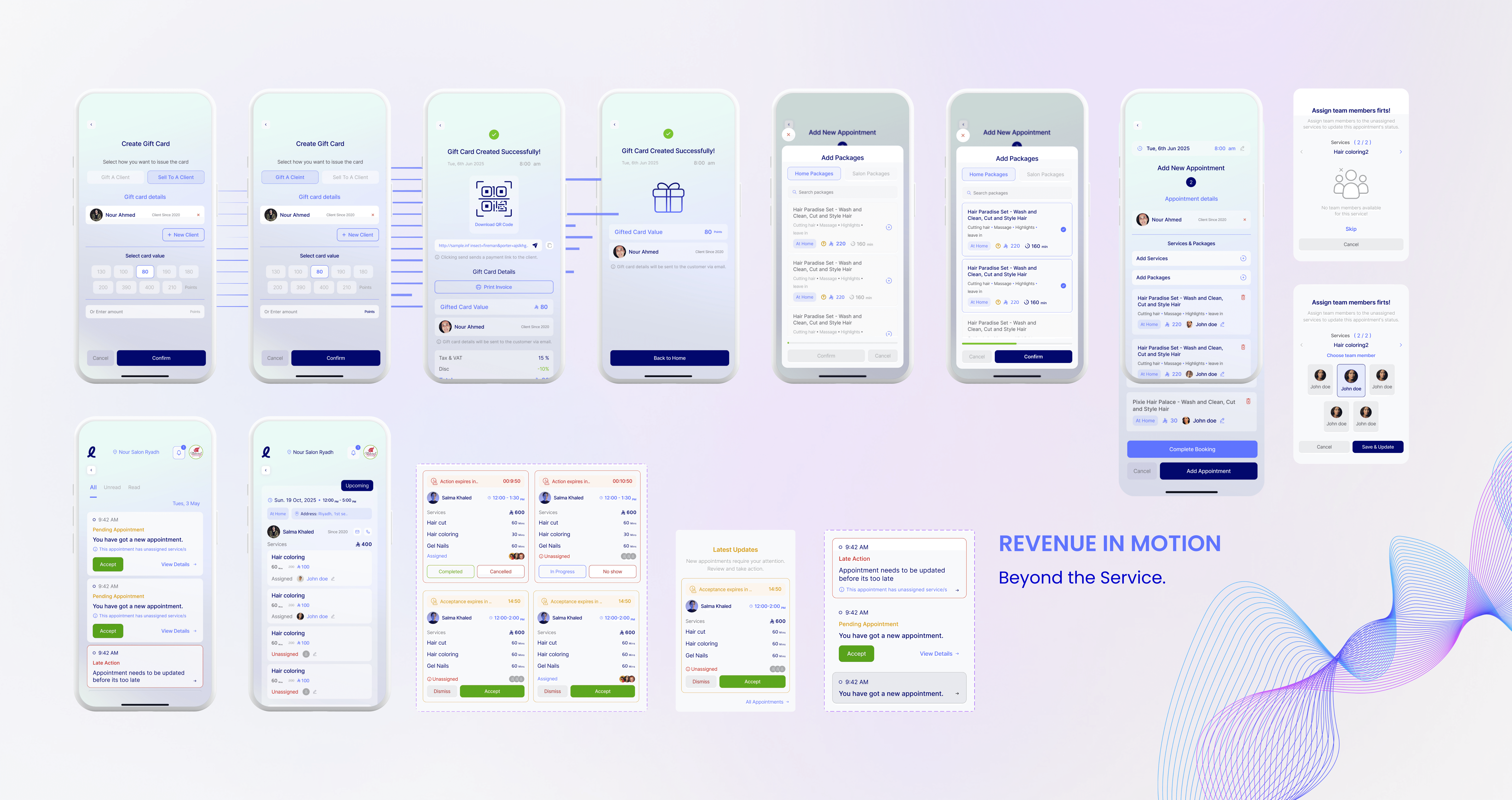
The app doesn't just wait for you; it pushes you. I designed a proactive alert system to prevent "Data Rot" and missed revenue:
The 15-Minute Warning: If a status isn't updated (e.g., an appointment is late), a high-priority "Late Action" alert triggers. I built this to warn the user they have only 15 minutes to take action before the schedule starts to drift.
The "LookFindr Choice" Fail-Safe: When the AI booking engine secures an "Unassigned" slot, the owner is alerted immediately. I designed a hard constraint: The owner cannot accept the appointment until they assign a member. This ensures every digital booking has a physical human accountable for it.
Availability Alerts: If a member becomes unavailable, a "Needs Action" alert pops up, forcing a reschedule or reassignment before the client even realizes there’s a conflict.
Integrated Utility: The "Everything" Tool
I bridged the digital CRM with physical salon needs through three key features:
Scan Attendance QR: Placed at the very top of the home page, this allows staff to check in and out. This isn't just a button; it’s live-integrated with the CRM’s HR system, automating payroll and attendance tracking for the owner.
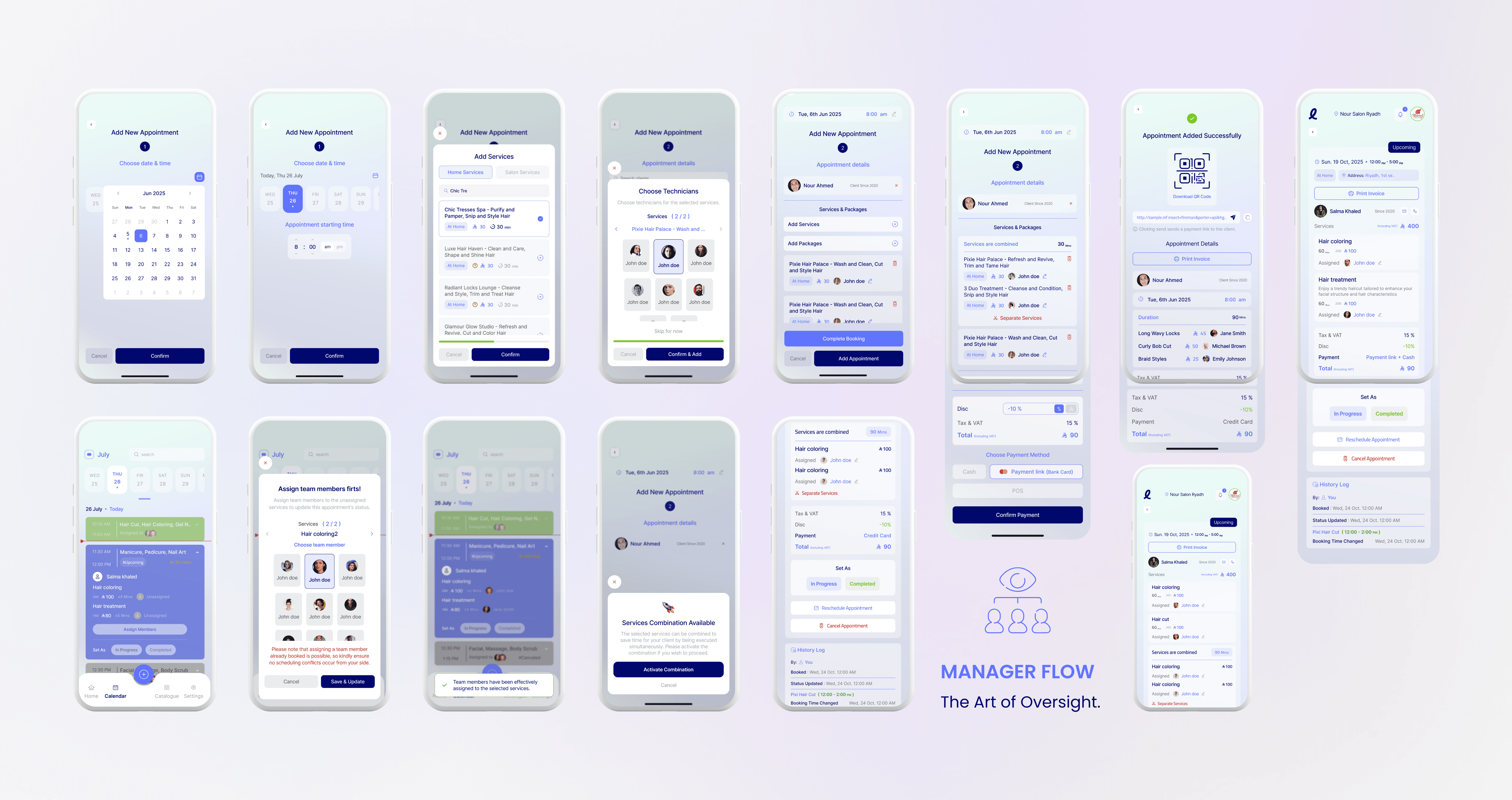
The Universal "Add" Button: Positioned in the nav bar for quick access, this allows authorized users to add Appointments or Gift Cards on the fly, capturing walk-in revenue instantly.
Service Level Minimization: Just like the desktop CRM, staff can update the "Service Level" in real-time to minimize wasted time, ensuring the calendar is always as tight and profitable as possible.
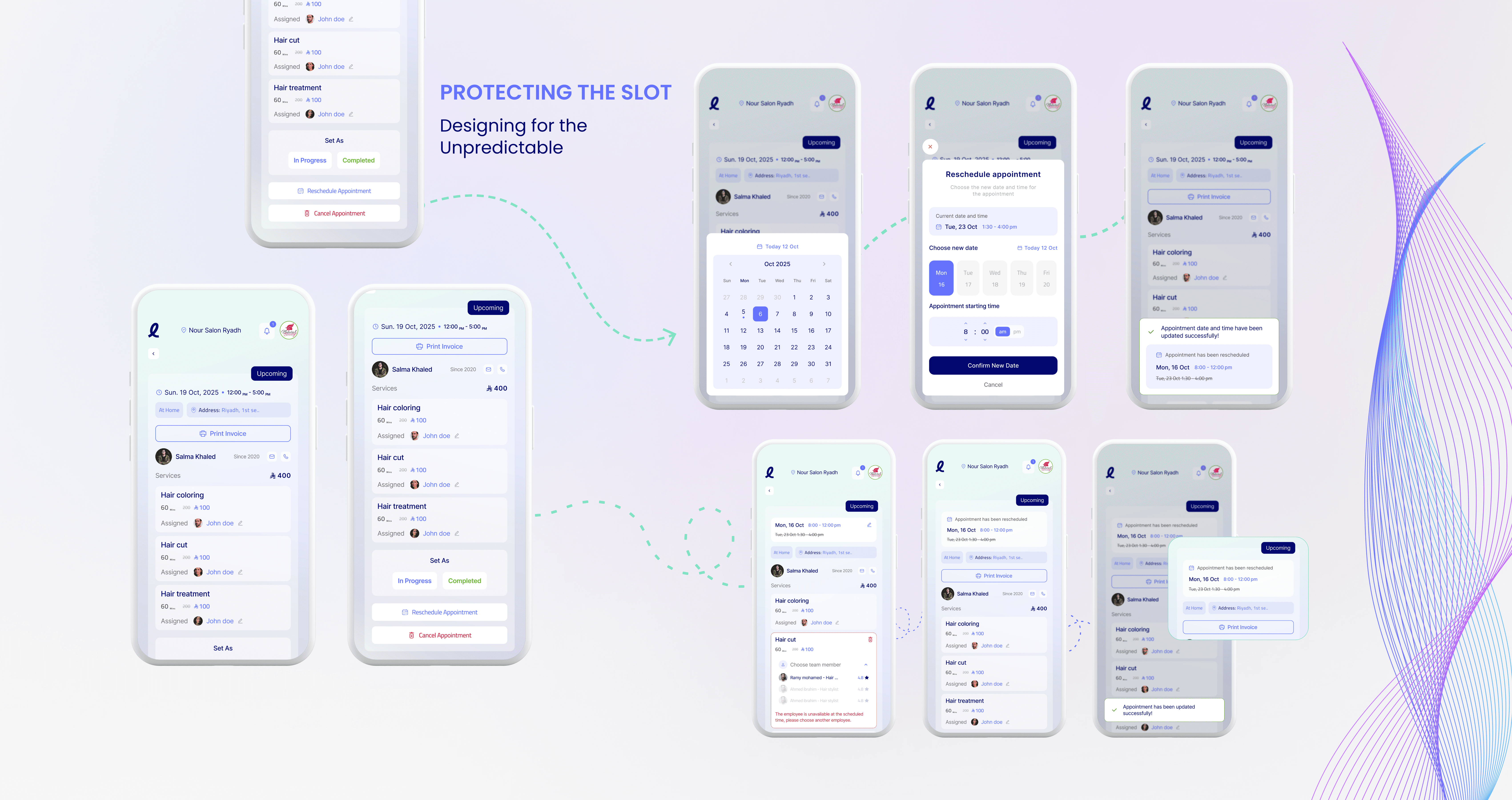
Closing the Loop Between Digital Intent and Physical Reality
Beyond the "feel-good" factor for the client, this loop solved a critical revenue leakage problem: The Invisible Gap. In high-traffic salons, the 5 to 10 minutes spent "finding" the next stylist or waiting for a client to move from the hair station to the nail bar adds up to hours of lost billable time per week. By automating this transition, I delivered three key business results:
Minimized "Chair Downtime": By pushing a "Be Ready" pop-up alert to Stylist B before the client even stands up, we ensured the next station was prepped and waiting. This reclaimed an estimated 15% of daily operational capacity that was previously lost to manual coordination.
Data-Driven Accountability: Because every handoff is triggered by a status change, the owner now has a Digital Audit Trail. They can see exactly where delays happen—whether a specific service is consistently running over or if a transition is taking too long—allowing for precision coaching instead of guesswork.
The "Luxury Echo" Effect: When a client’s phone buzzes with their next step at the exact moment their current stylist finishes, it creates a high-tech "Concierge" feel. This perceived value directly correlates with higher re-booking rates and increased tips, as the service feels orchestrated rather than accidental.