Scalable Fish Marketplace
YEAR:
2024
CLIENT:
UAE Fish Marketplace
ROLE:
Lead UX/UI & Product Design (UX Strategy, UI, Design System, Stakeholder Collab)
INDUSTRY:
On-Demand Delivery / E commerce Marketplace
EXPERIENCE:
Mobile App (iOS & Android) Customer-Facing Experience
Reading Time: 7 Minutes
Scanning Time: 2 Minutes
How it all started
I was brought in to fully reimagine the app, from the UX foundations to the final UI.
Over 40 days, I led a structured redesign process: starting with a detailed consultation and UX audit, moving into IA improvements, wireframes, and iterations with stakeholders, and finally delivering a modern interface.
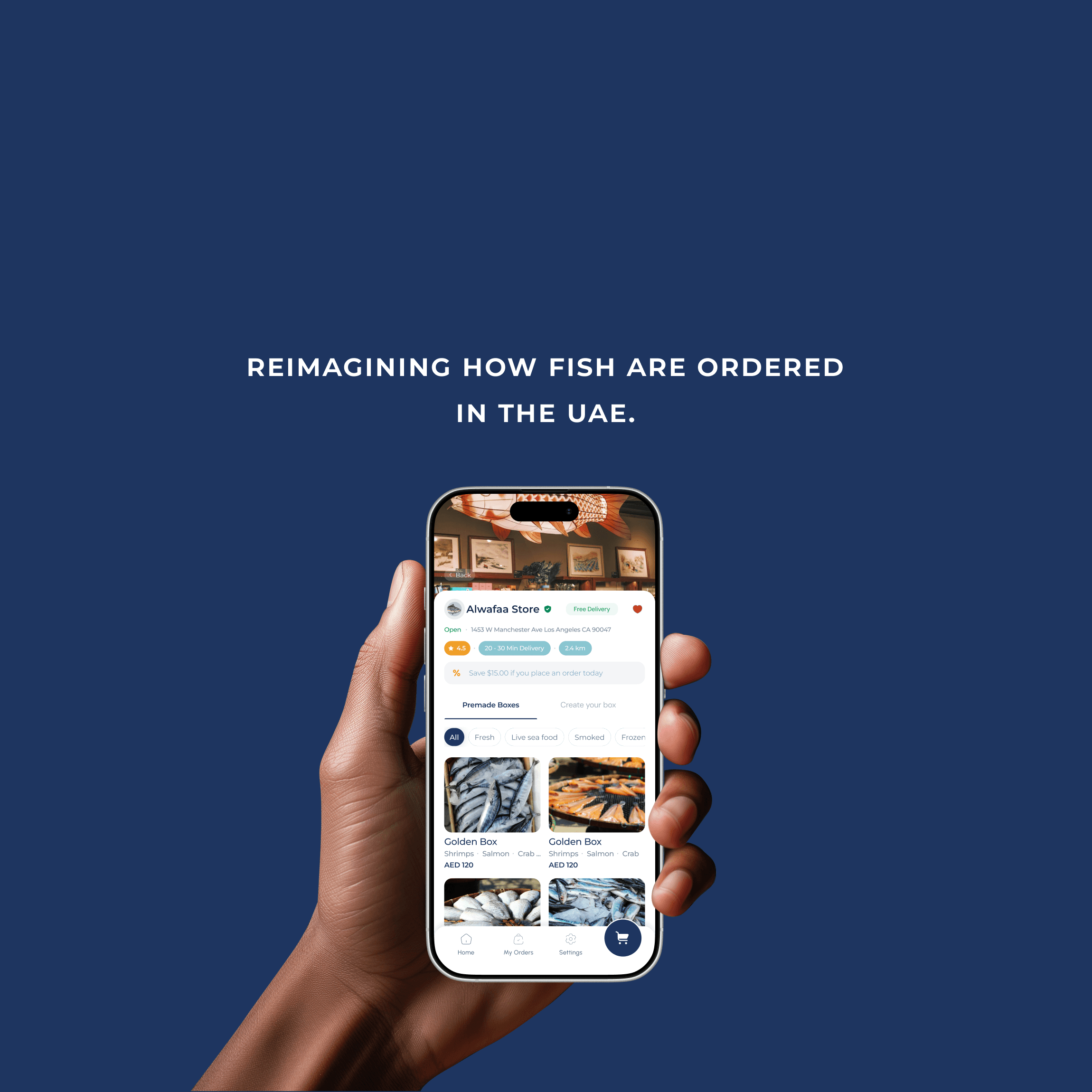
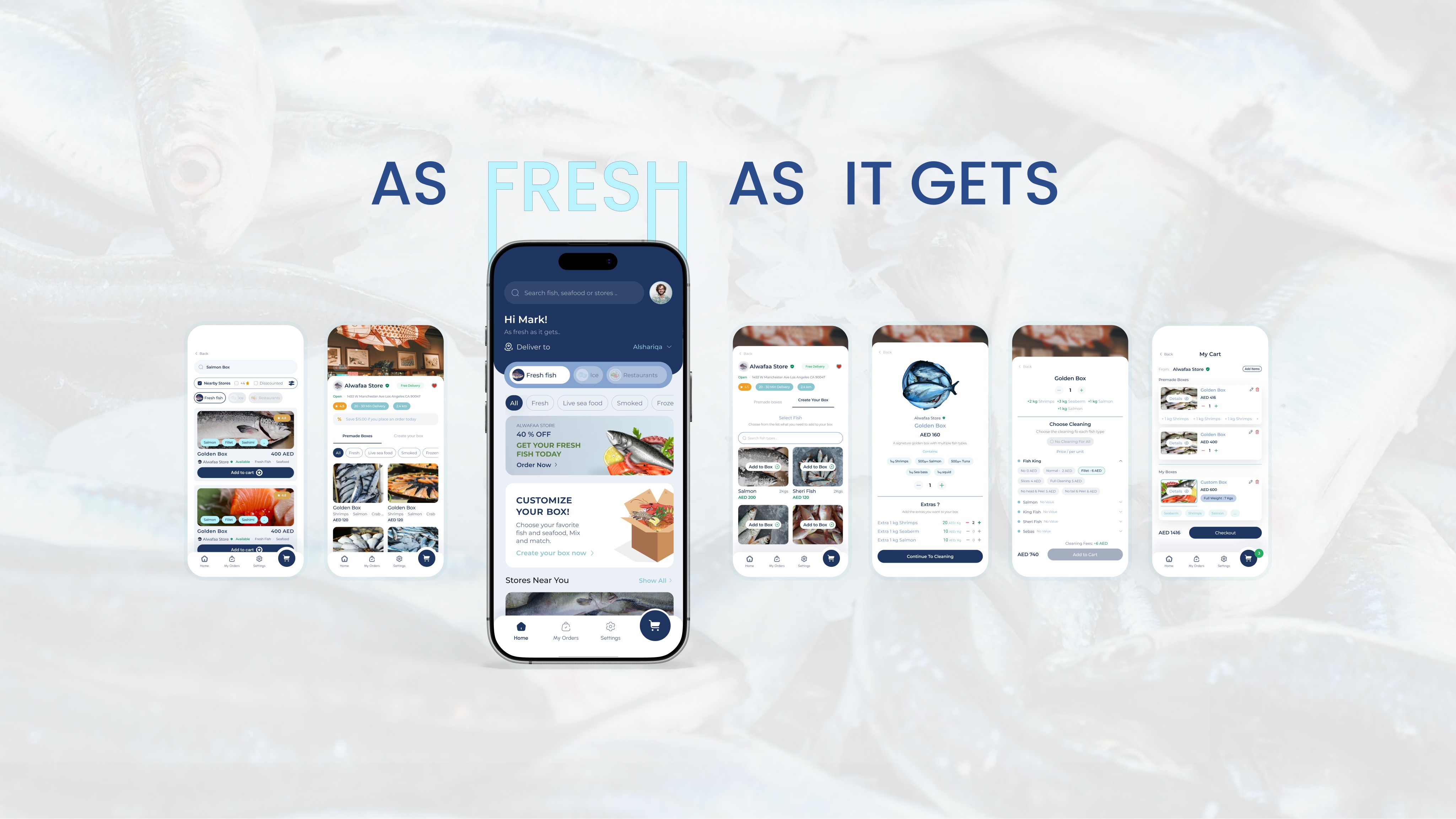
The result is a cleaner, more scalable shopping experience that simplifies complex ordering flows, highlights product variety, and supports the way users actually shop for fresh fish and more in the UAE market.
The Fresh Fish Dilemma
In a market where freshness is everything, the digital experience was falling behind. The original app struggled to bridge the gap between a raw marketplace and a restaurant service, leading to user confusion and lost revenue. I was brought in to audit the existing flaws and architect a system that scales.
Identifying the Gaps
User Friction:
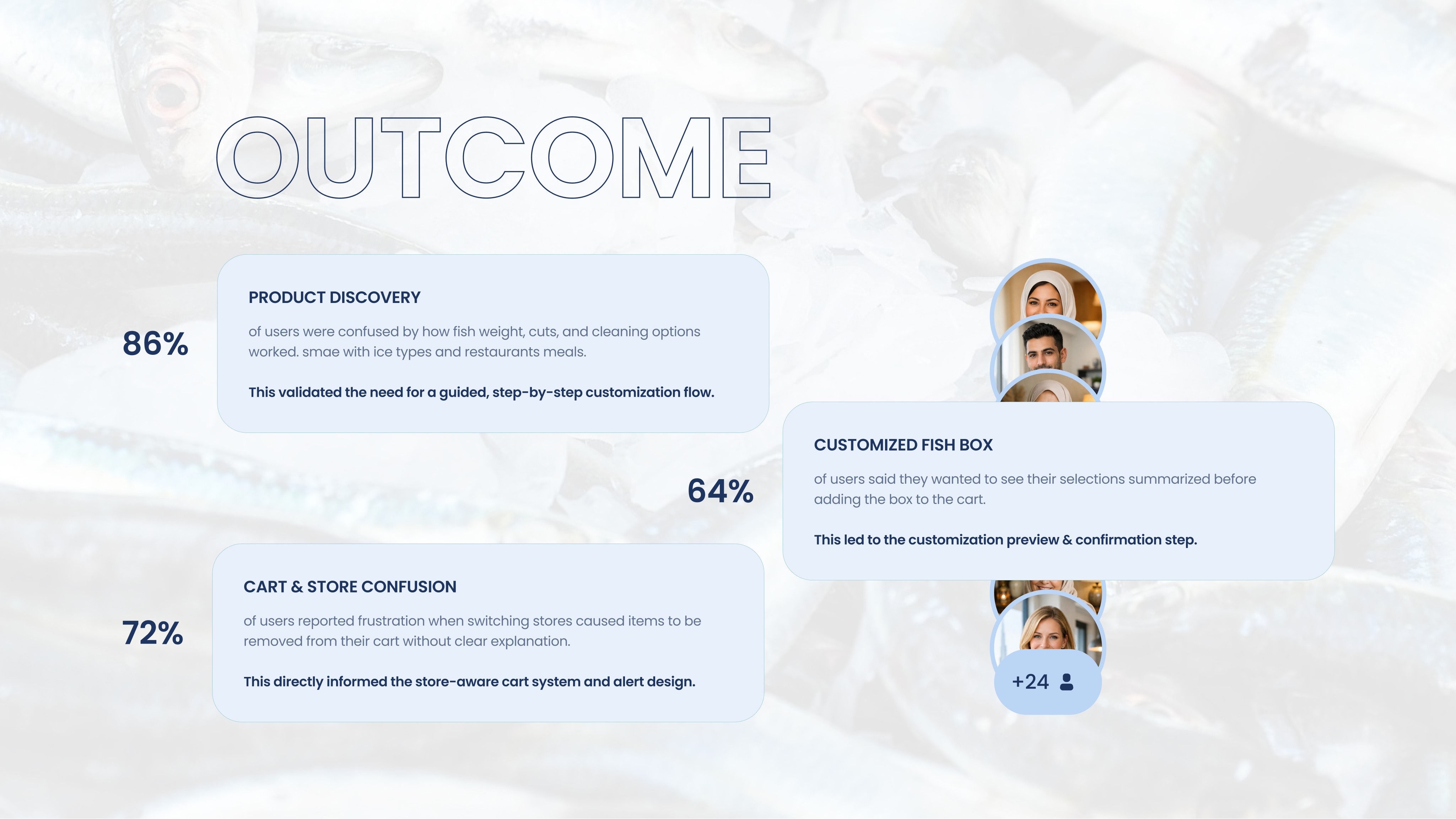
Category Confusion: Users struggled to distinguish between raw fresh fish, ice products, and restaurant-prepared meals within the interface.
Customization Fatigue: The process for choosing fish cuts, cleaning methods, and weight was purely manual, involving too many steps without any visual guidance.
The "Reset" Frustration: Switching between different stores caused the shopping cart to reset without warning or clear messaging, leading to high abandonment.
Business Challenges:
Revenue Leakage: High cart abandonment rates triggered by unclear store-switching behavior and an over-complicated, multi-step checkout.
Retention Hurdles: Low repeat usage despite the fact that fresh fish and ice are weekly essentials for the target demographic.
Discovery Barriers: Difficulty discovering high-value products, particularly restaurant-prepared meals and specific types of ice.
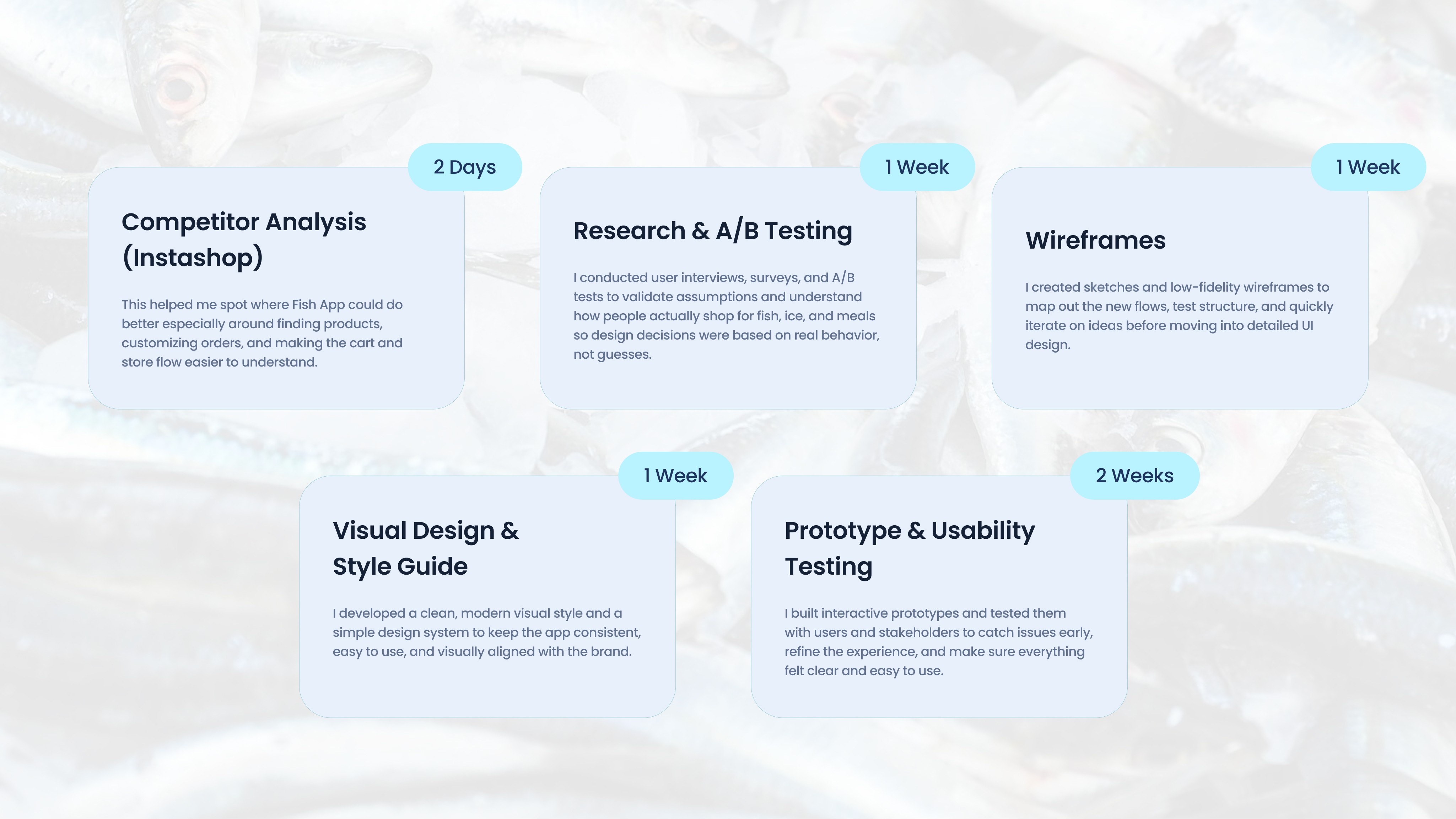
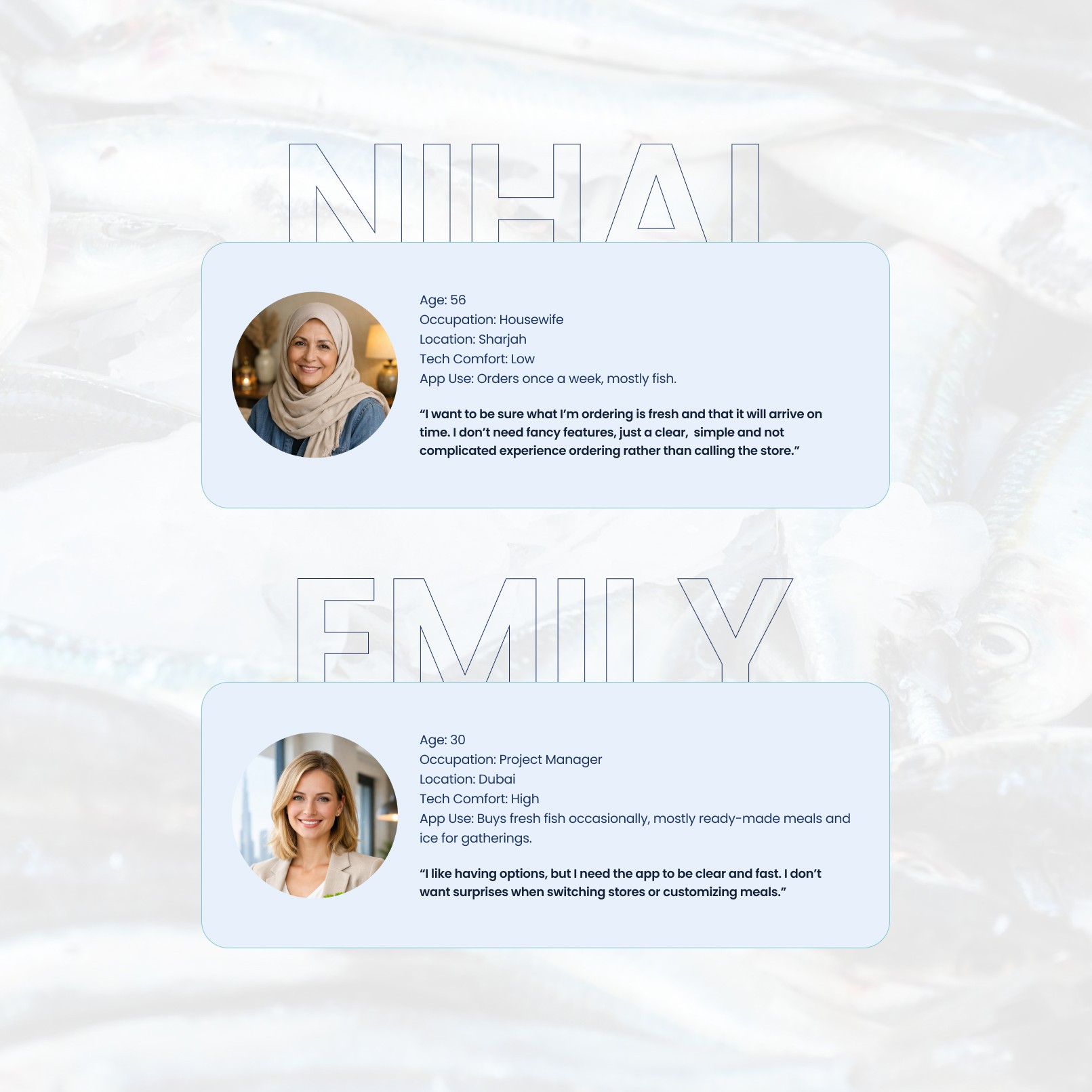
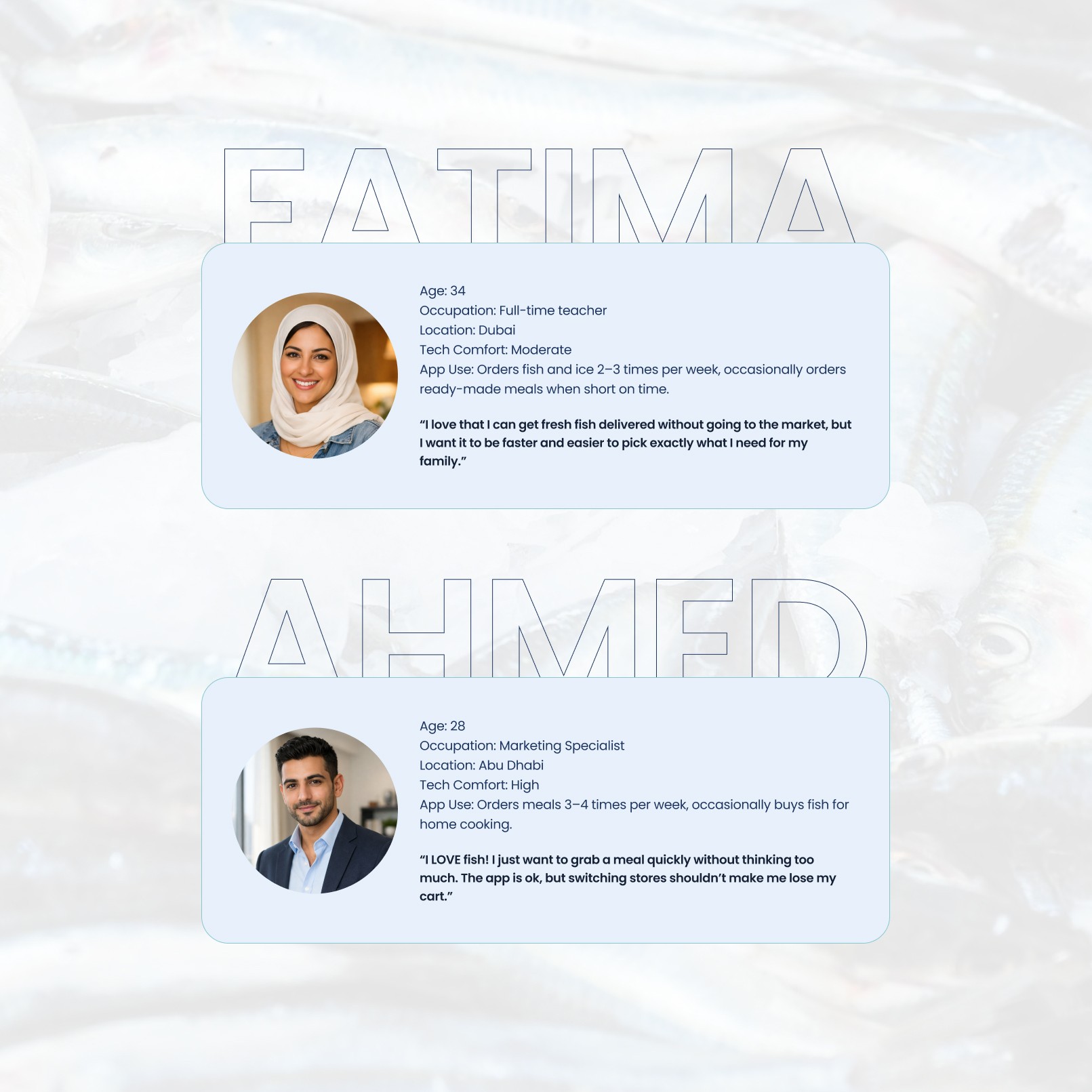
After the initial consultation and competitive analysis, I focused on understanding real users and the pain points in the existing app. I used interviews, and targeted A/B tests to uncover what was not working and where the biggest opportunities for improvement were before moving into design.
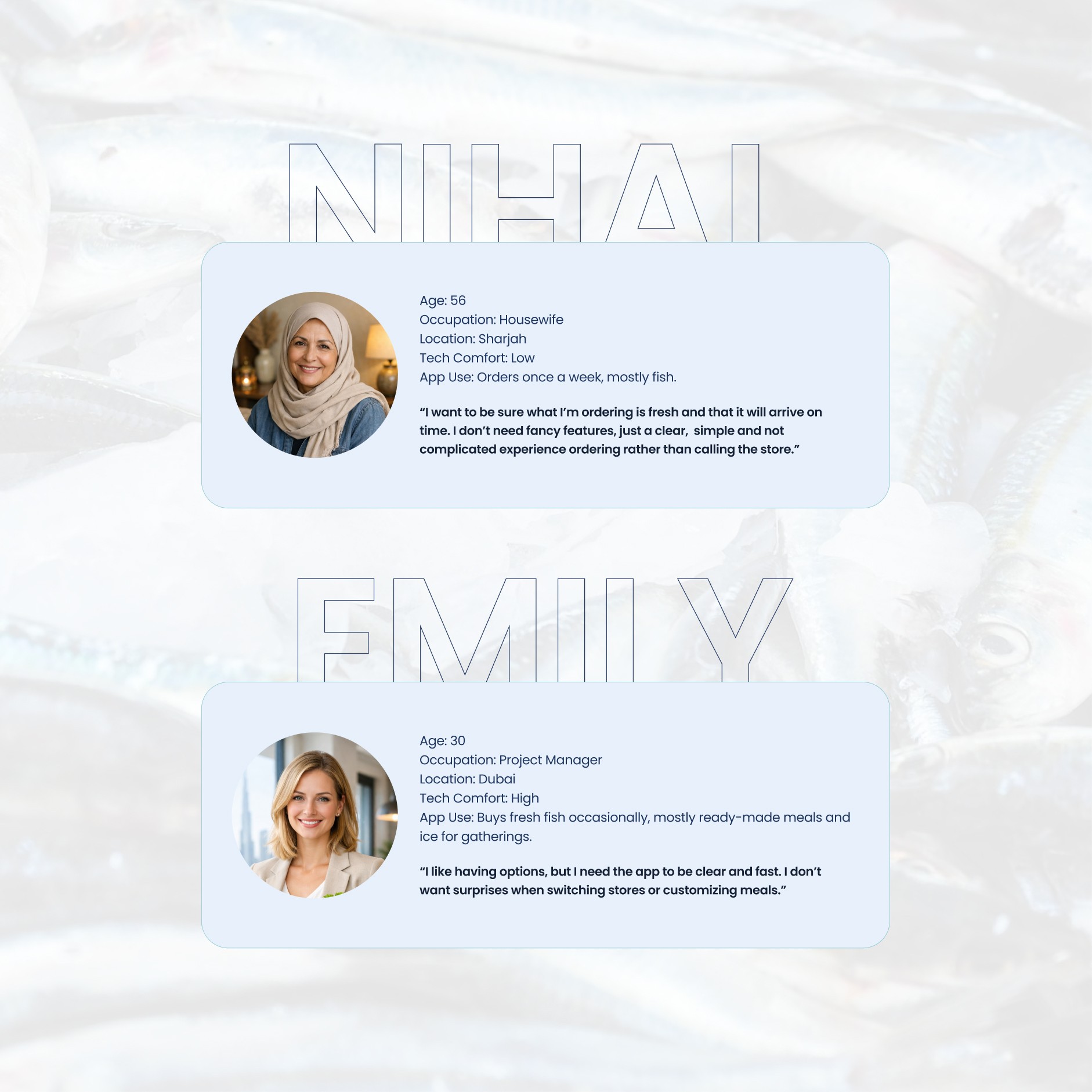
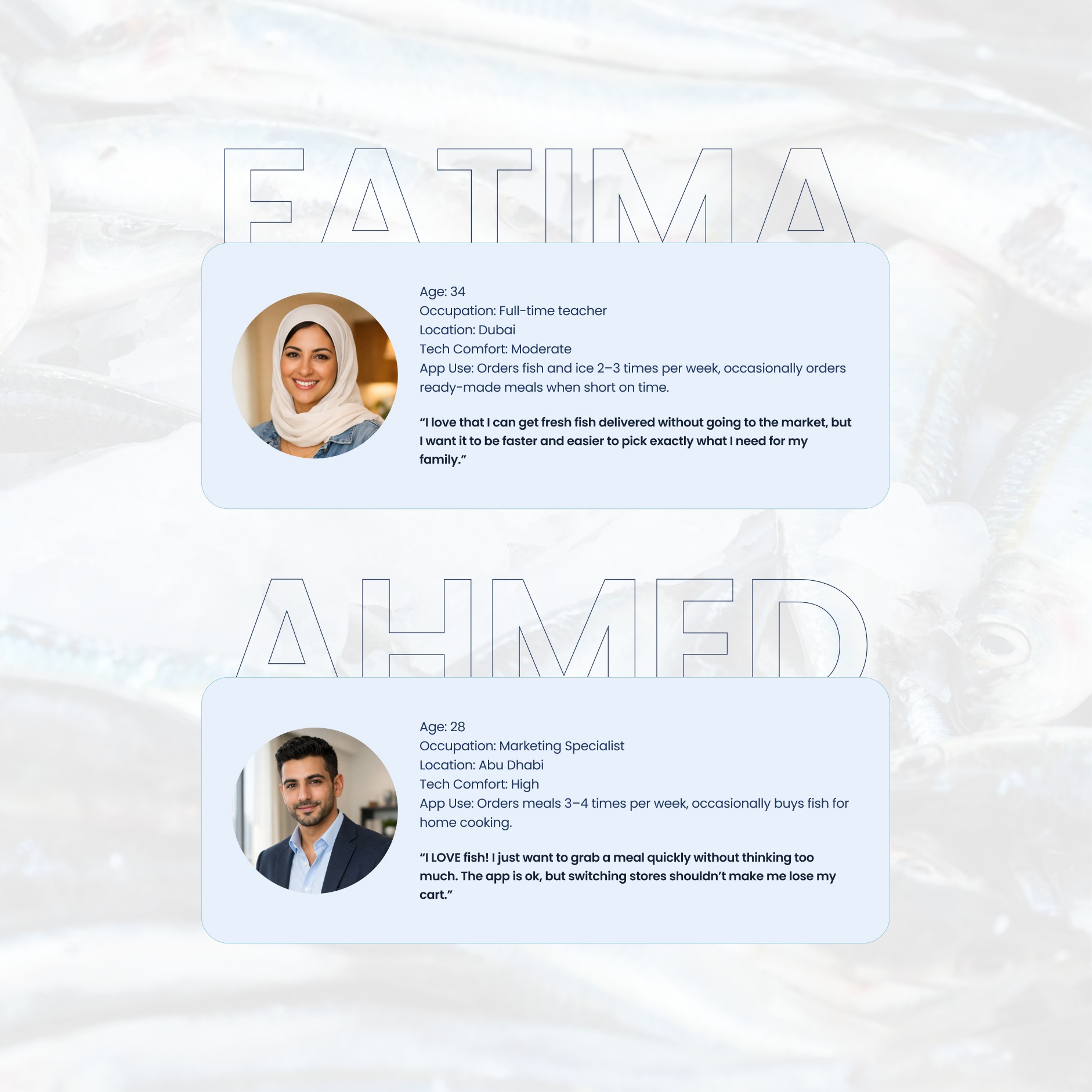
Research & Strategic Audit
To move beyond surface-level UI fixes, I began with a comprehensive UX audit and consultation phase. I translated technical friction points and user pain points into a structured presentation for stakeholders. This deck served as the "Source of Truth" for the redesign, providing data-backed answers to the most critical product questions:
Friction Analysis: Identifying exactly where users were getting stuck in the ordering loop.
Drop-off Logic: Analyzing why specific flows—like store switching—were causing immediate cart abandonment.
Pattern Validation: Pinpointing which interaction patterns were outdated or cognitively taxing.
Architecture Strategy: Defining how a new Information Architecture could simplify the journey between raw fish, restaurant meals, and essentials.
Business ROI: Prioritizing improvements that would drive the fastest impact on conversion and repeat usage.
Behavioral Architecture
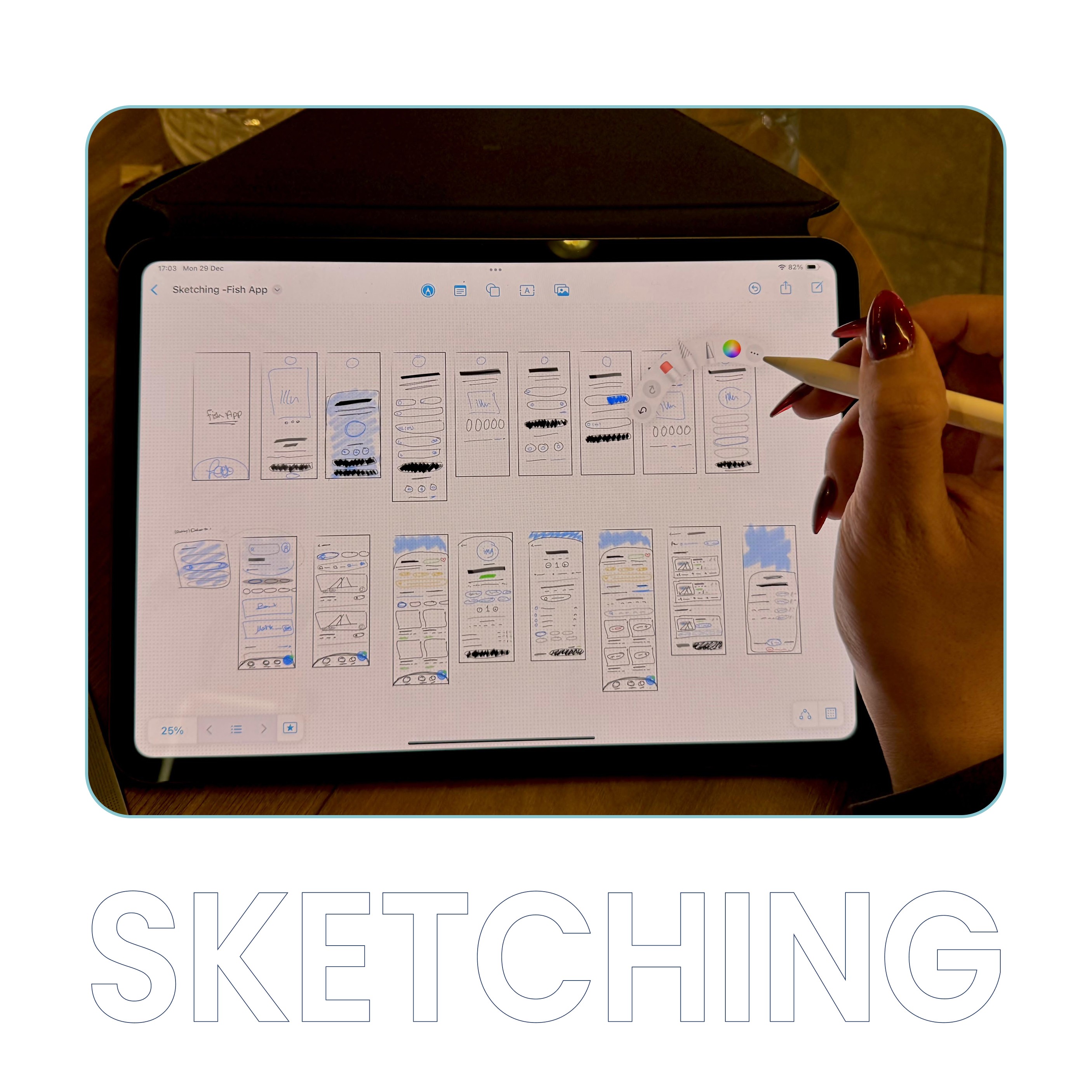
Structural Mapping: To solve the "Category Confusion," I overhauled the Information Architecture. I moved away from a cluttered, flat list and implemented a Three-Pillar System:
Marketplace: Dedicated to raw, fresh fish.
Kitchen: Focused on restaurant-prepared meals.
Essentials: Streamlined for ice and supply orders. This logic-driven separation allowed for distinct flows tailored to the specific intent of each purchase type.
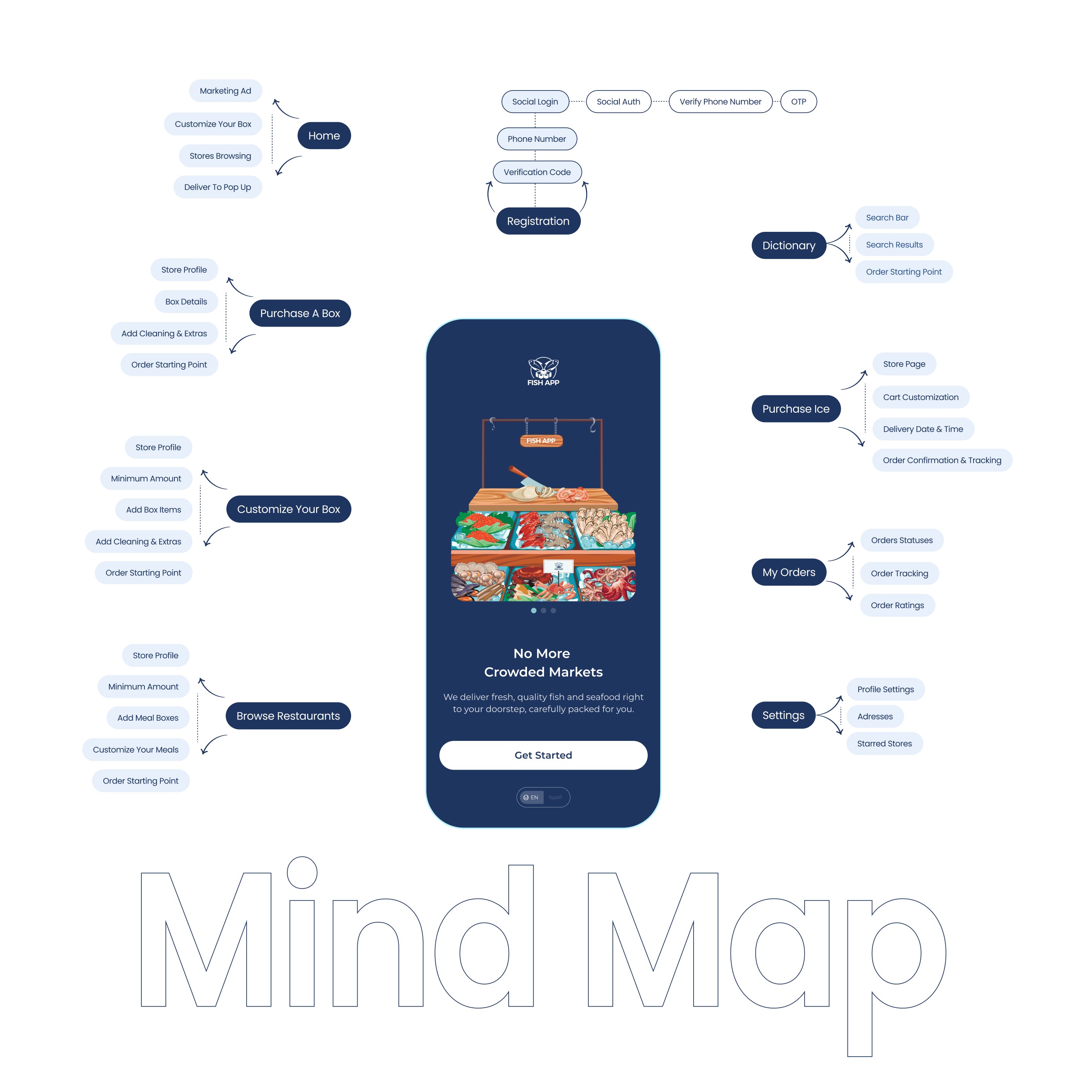
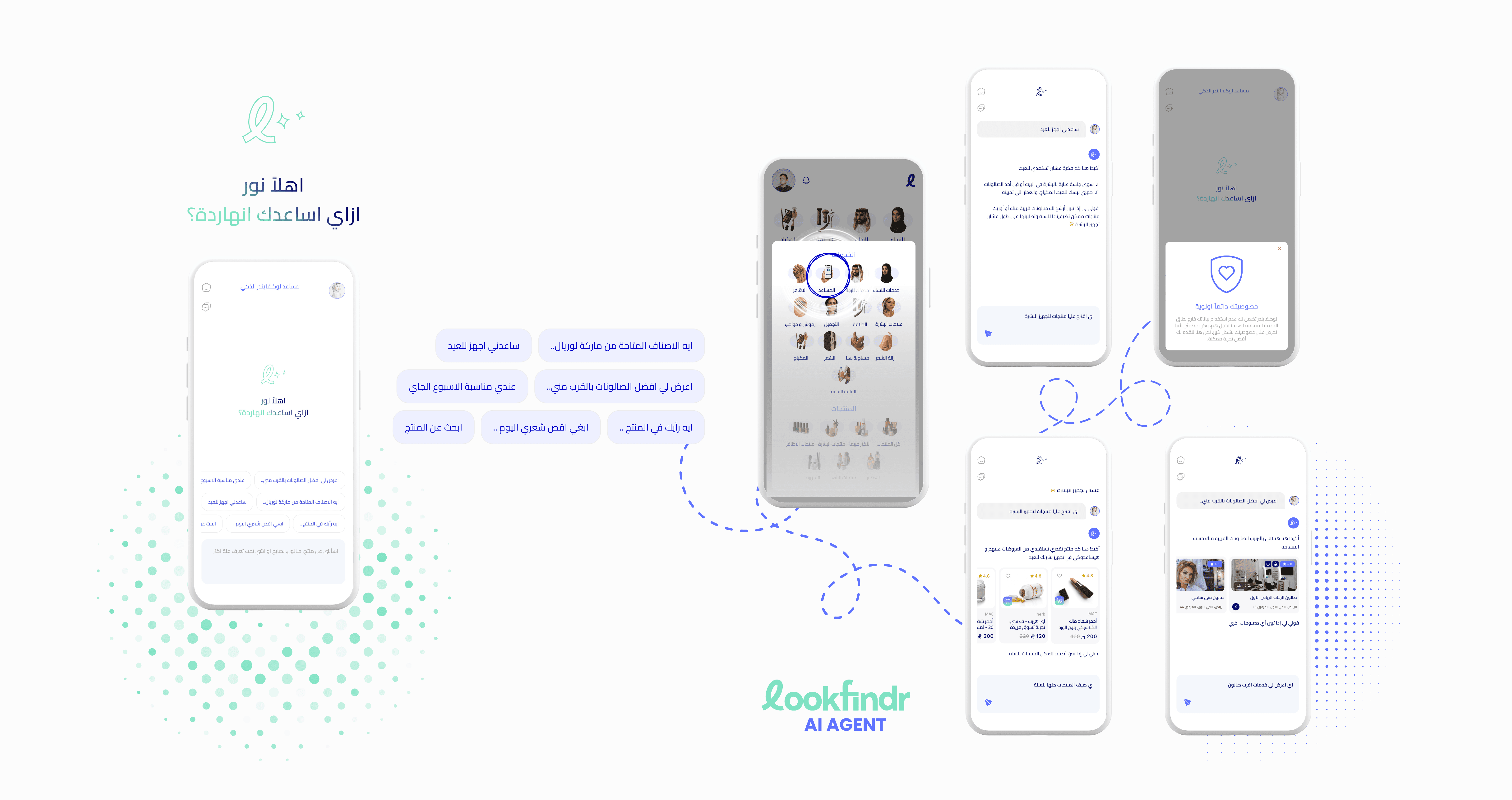
final UI & usability testing.
Once the main problems were clear, I moved into shaping the actual experience through design and testing. The UI was built and refined through multiple iterations, with usability testing and stakeholder feedback guiding each step. Along the way, I also created a shared component library to keep everything consistent and make it easier for the team to move fast without losing quality.
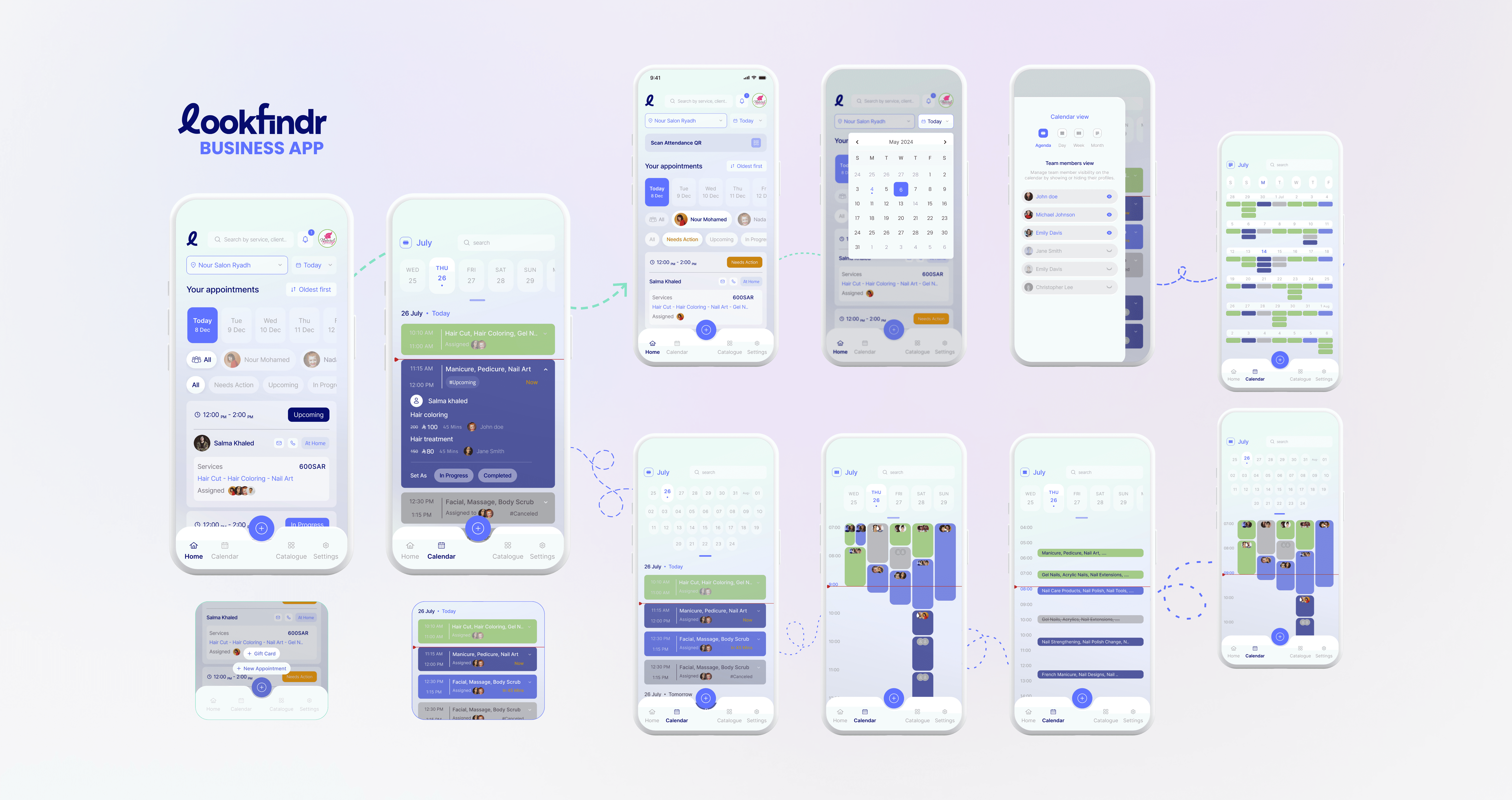
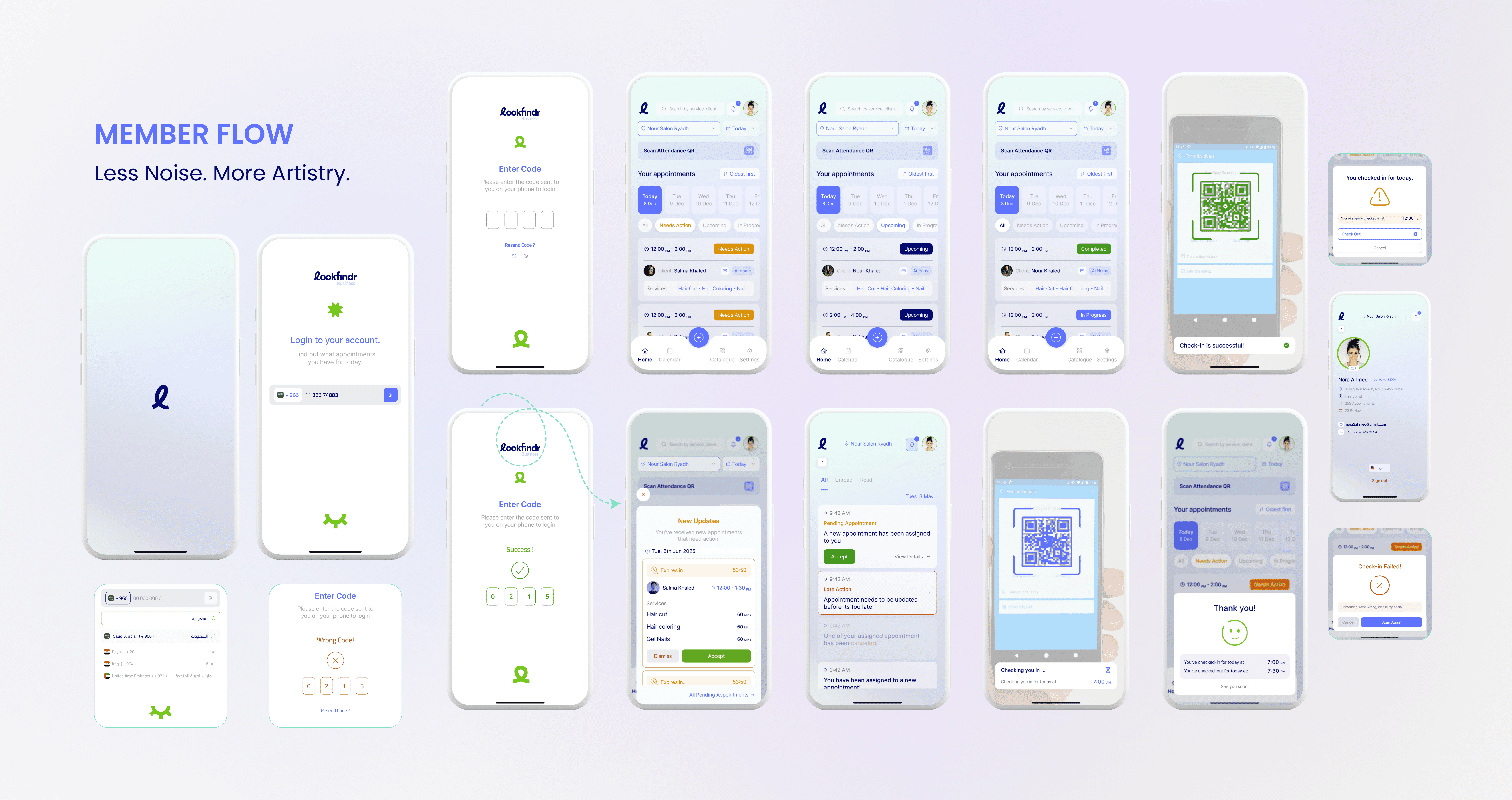
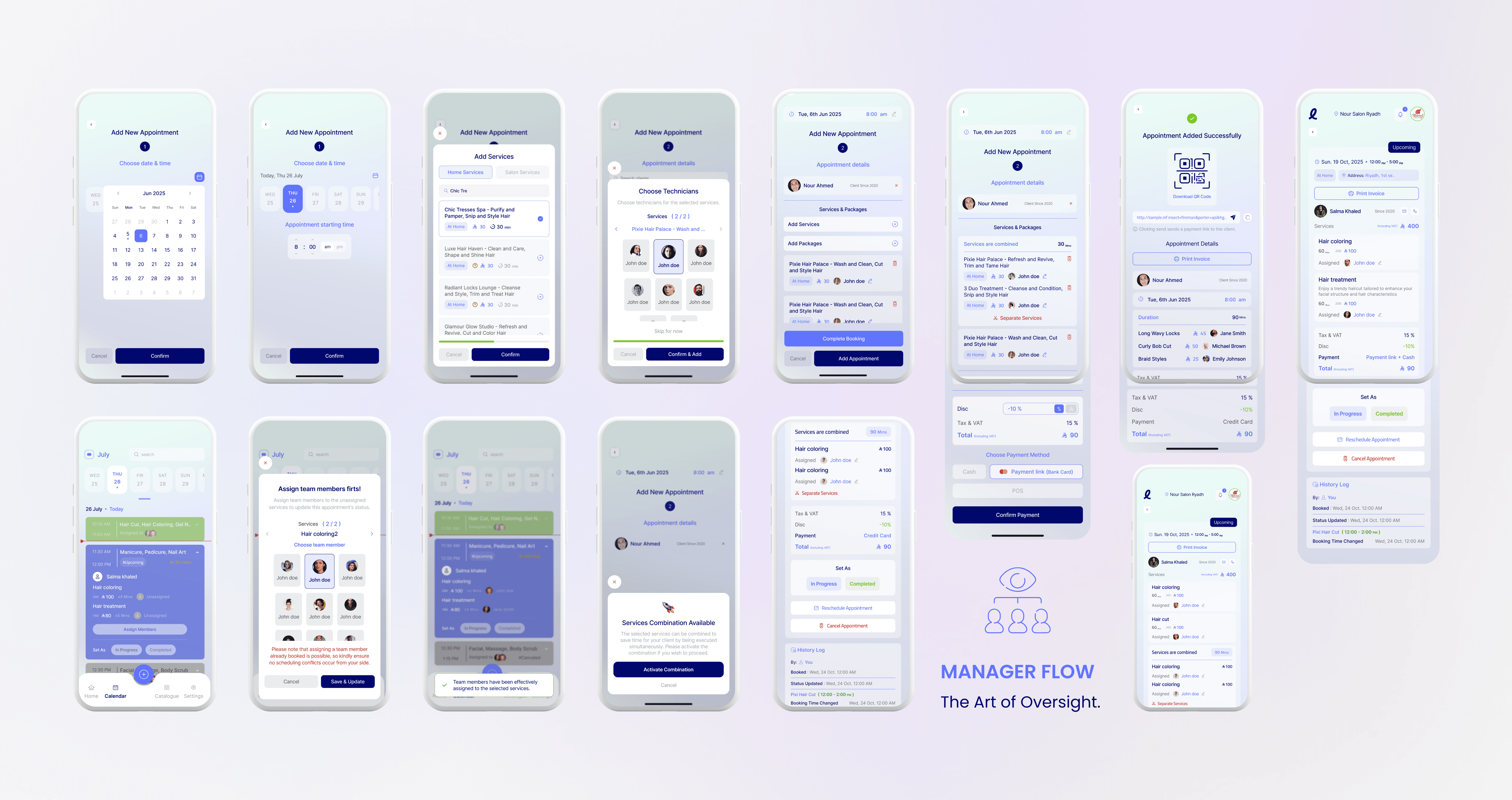
A senior-level CRM must respect permissions. I designed two parallel experiences that keep everyone focused:
The Owner’s Command: The owner sees everything. I implemented a global Member Slider at the top of the dashboard, allowing them to filter by "All Members" or drill down into a specific stylist's day. They are the "Final Arbiter," calling clients, rescheduling for the whole team, and managing the Service Catalogue that staff can't see.
The Member’s Focus: For the stylist, the noise is stripped away. They see their list and their appointments. This prevents the "Decision Fatigue" of a busy salon and keeps them focused on the client in their chair.