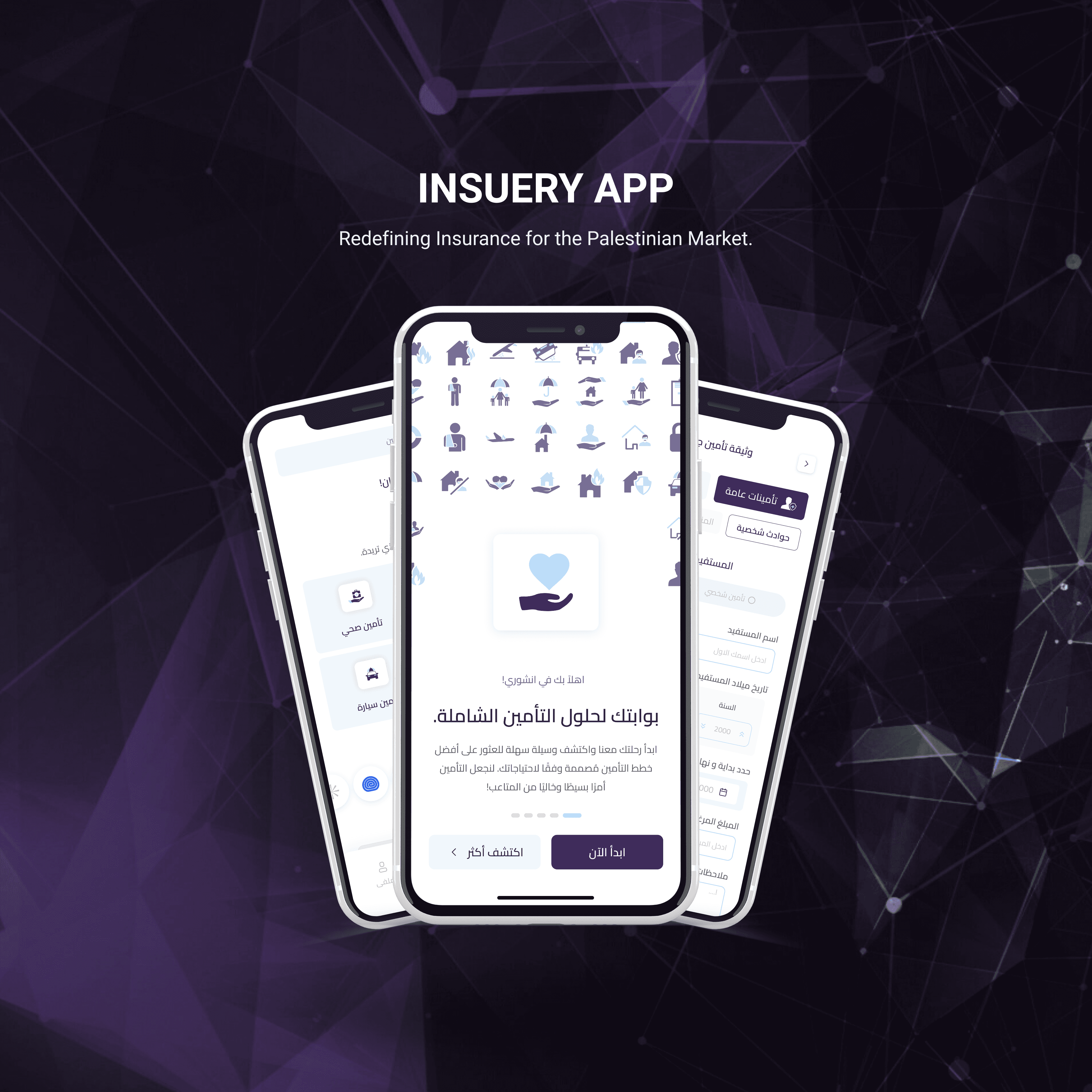
Multi-Vertical Insurance App
YEAR:
2024 ( 6 Weeks )
CLIENT:
Insurey (West Bank, Palestine)
ROLE:
Senior Product Designer (Lead on UI/UX & Stakeholder Strategy)
INDUSTRY:
InsurTech & Fintech
EXPERIENCE:
iOS & Android (Consumer)
Reading Time: 4 Minutes
Scanning Time: 40 Seconds
Digitizing Insurance in the West Bank
Two years ago, the insurance landscape in the West Bank was a world of physical brokers, paper-heavy offices, and face-to-face handshakes. Moving this ecosystem into a mobile app wasn't just a design challenge; it was a psychological one. The goal wasn't just to sell policies; it was to build a digital bridge in a market where trust is the primary currency.
The most pivotal moment of the project happened before a single final pixel was drawn. The stakeholders pushed for a "Guest Mode" to lower the entry barrier. But in a high-stakes legal environment where an accurate quote depends entirely on verified identity and local database records, "Guest Mode" risked being a promise the app couldn't keep. I stepped in not just as a designer, but as a strategist, advocating for a Registration-First Flow. By capturing phone numbers and ID verification at the start, we ensured that every quote was legally binding and accurate. We didn't just build a login; we built a foundation of certainty.
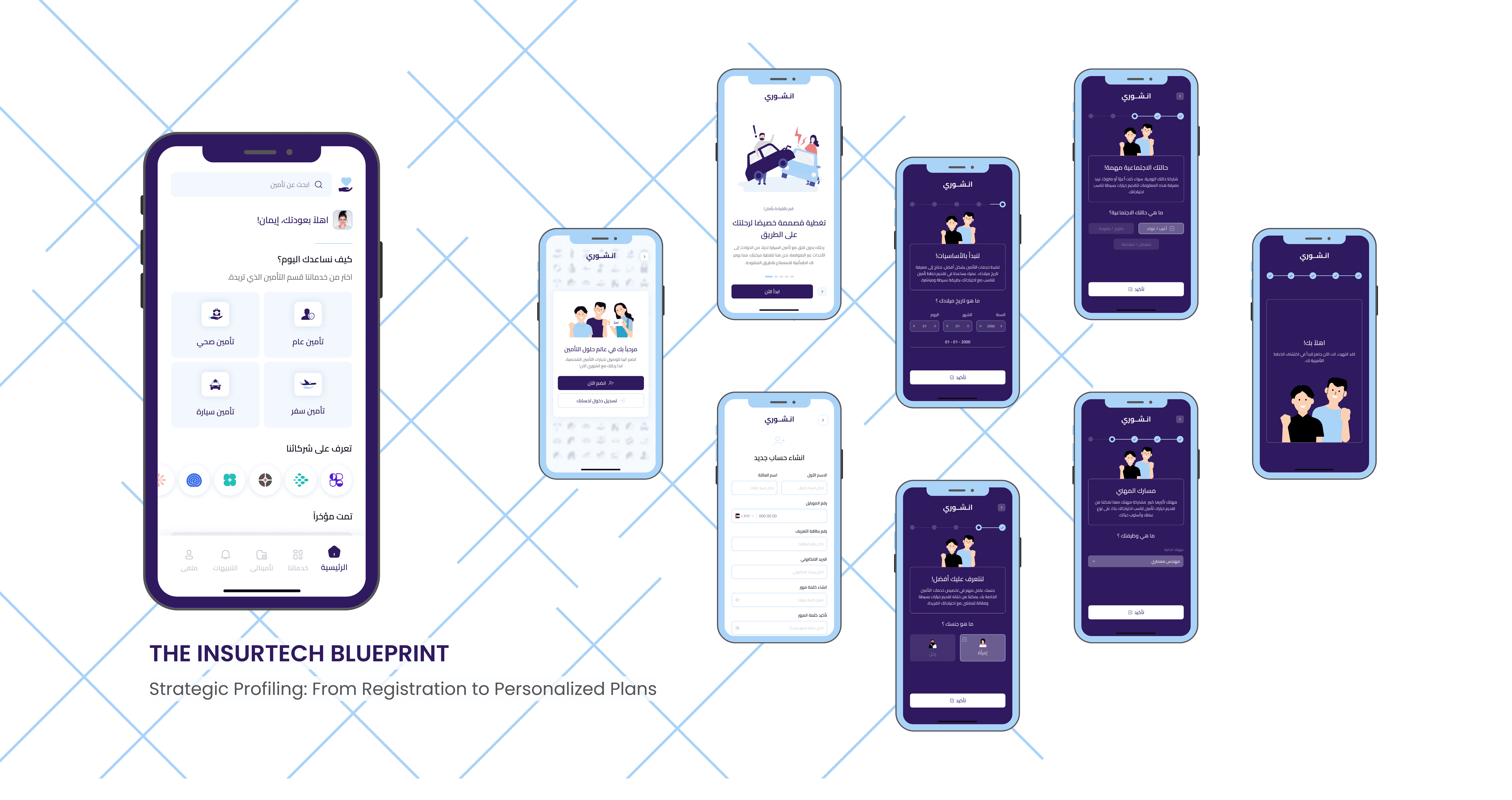
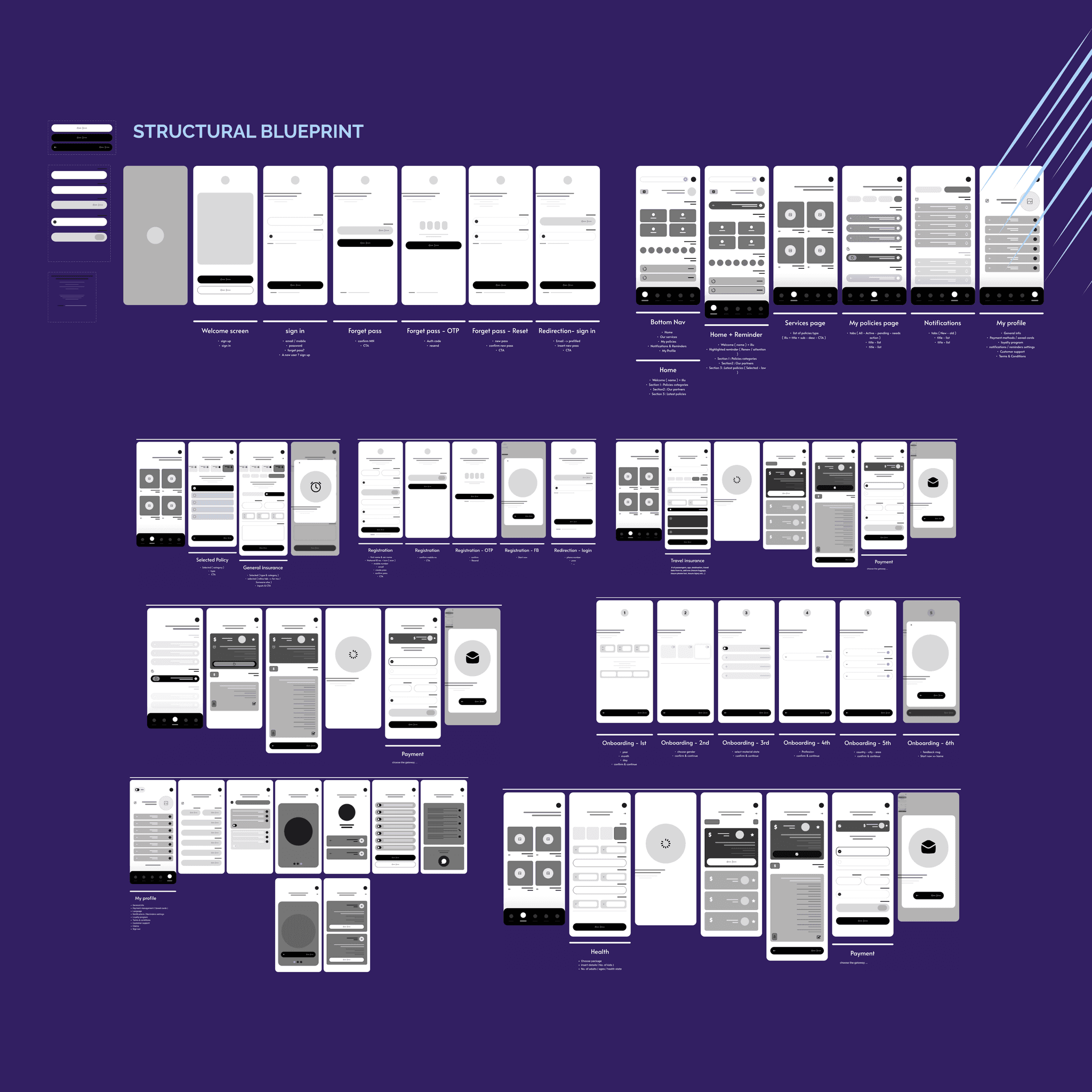
Once the registration gate was passed, I designed a 6-step conversational walkthrough to bridge the gap between "cold data entry" and "tailored service." Instead of a dense form, users encountered a guided journey that explained the why behind every request.
By framing questions about profession, location, and life stage as a way to "unlock accurate plans," we transformed legal requirements into user value. This strategy reduced friction and ensured that the moment a user reached the marketplace, the engine wasn't just showing generic quotes—it was showing their quotes. This "Profile Setup" turned a complex setup into a moment of clarity, cementing the app’s role as a trusted partner from step one.
The Strategy: Advocacy Through Data
The decision to enforce registration was met with skepticism until the data spoke. Using tracking, we identified that while some users dropped off at the ID stage, they weren't our target customers; they were "curiosity browsers." By filtering for serious intent early, we protected the integrity of the marketplace and ensured the operational team was handling high-quality leads.
The System: Managing Complexity with Precision
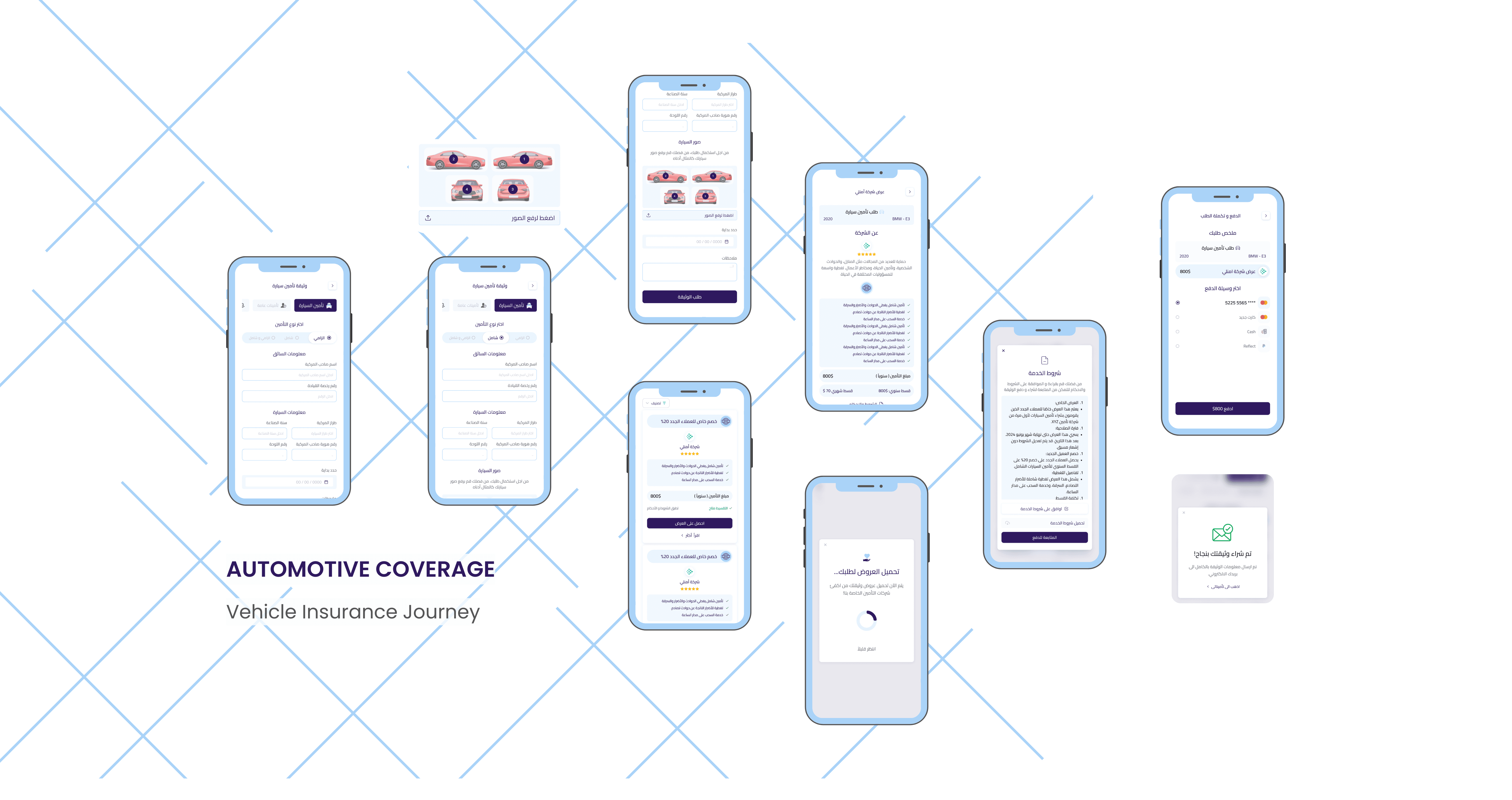
Insurance is notoriously data-heavy, especially car insurance requiring chassis and engine numbers. While "manual entry" is often seen as a friction point, here it was a Verification Ritual.
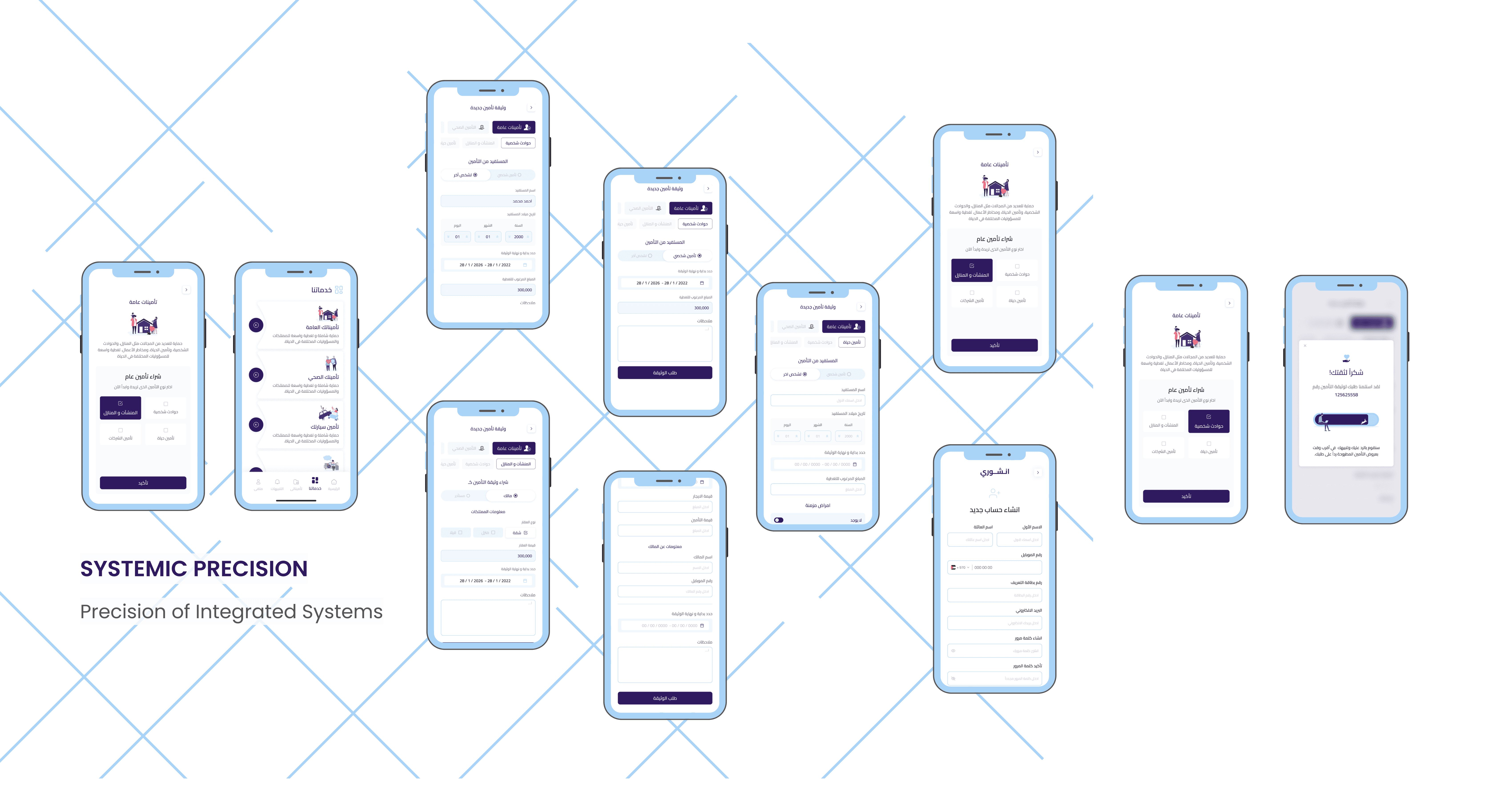
The Compliance Engine: To balance legal requirements with usability, I utilized heavy sectioning and generous white space. This prevented "Form Fatigue," turning a technical necessity into a guided, step-by-step conversation.
The Safety Net: Recognizing the reality that users might need to step away to find their documents, I implemented a robust Auto-Save & Retrieval system. If you leave the app to check your car license, your progress waits for you exactly where you left off.
Visual Guardrails: For the mandatory car photography, I designed a 4-Illustration Guide. Instead of guessing the angle, users were given a blueprint for success, ensuring the operational team received usable evidence on the first attempt.
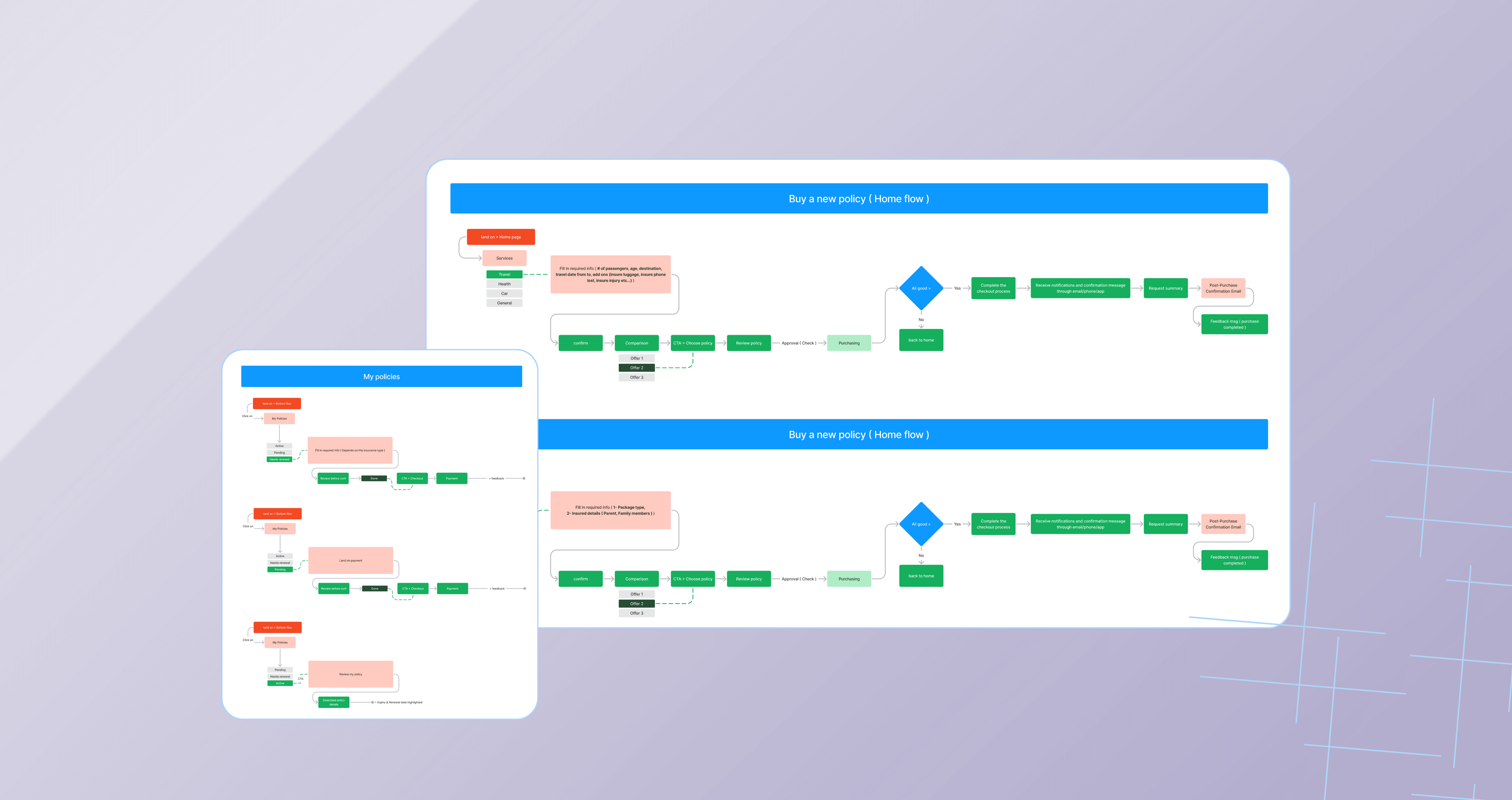
When it came to the "Offers" page, the challenge was to facilitate comparison without the clutter of traditional tables.
The Marketplace: Information Over Overload
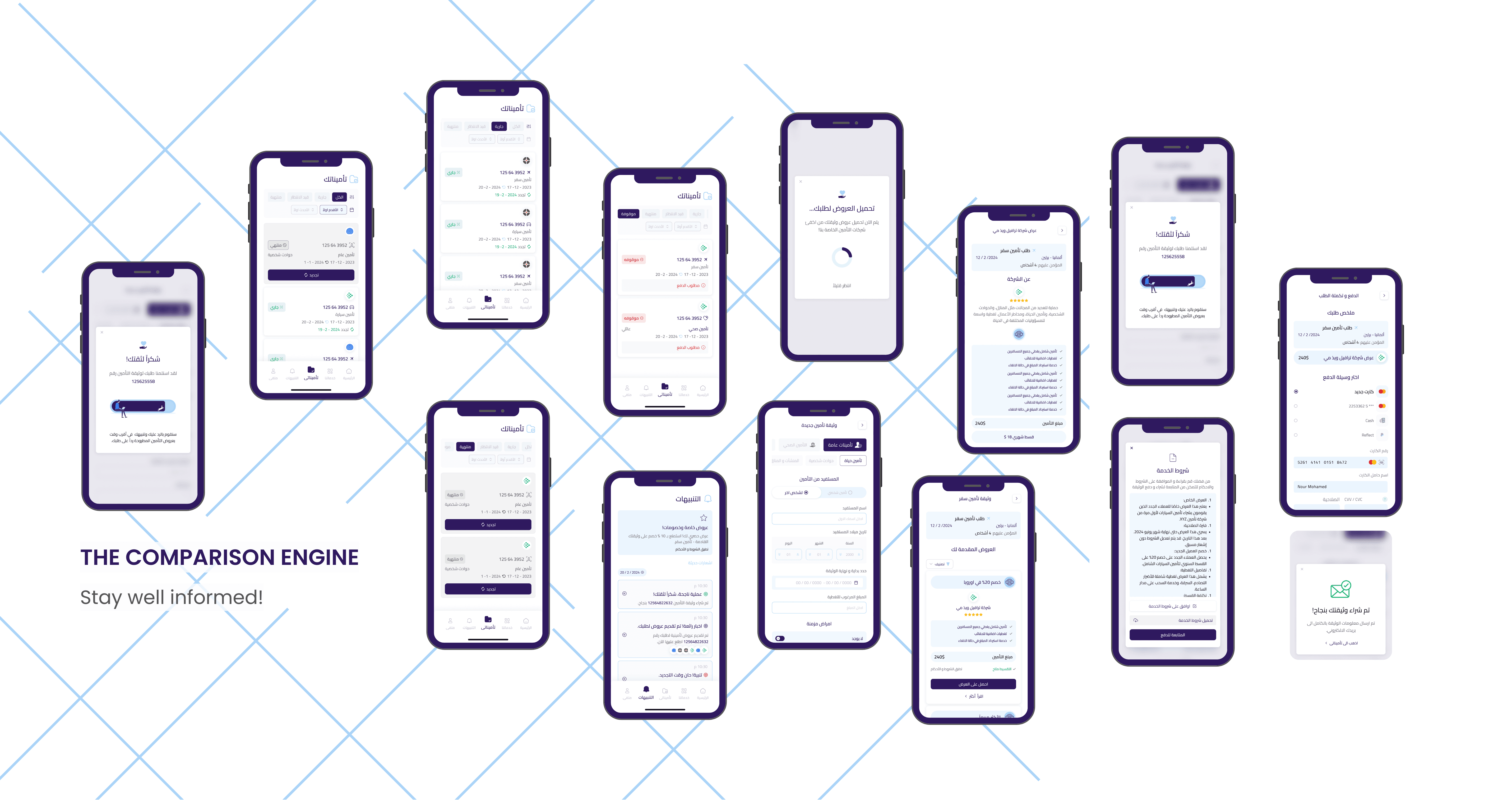
The Comparison Card: Instead of a horizontal table that breaks on mobile, I developed an Informative Stacked Card system. Each card prioritized the vendor's logo, rating, and price, with a "View More" toggle that expanded into a deep-dive comparison.
Psychological Anchors: I introduced a tagging system—Most Popular, First Timers, Discounted—to provide social proof. In a region where people often rely on word-of-mouth, these tags served as a digital nudge toward the best value.
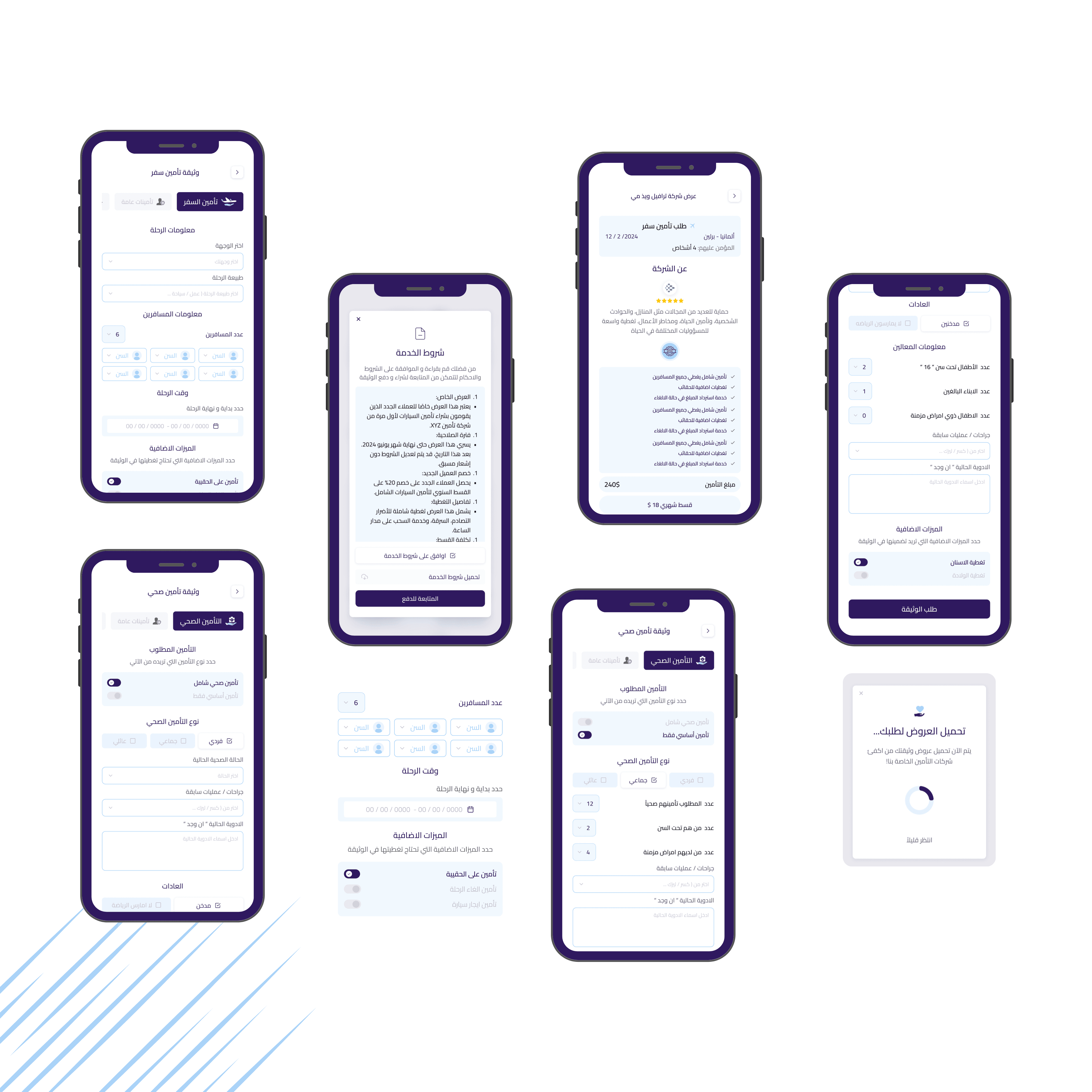
The Human Logic: Insurance is rarely just for the self. I built a dynamic Label-Based Toggle for "For Someone Else." The UI reflects the user's choice instantly, expanding the form to accommodate family members without breaking the flow.
The Business Lever: Accessibility via Installments
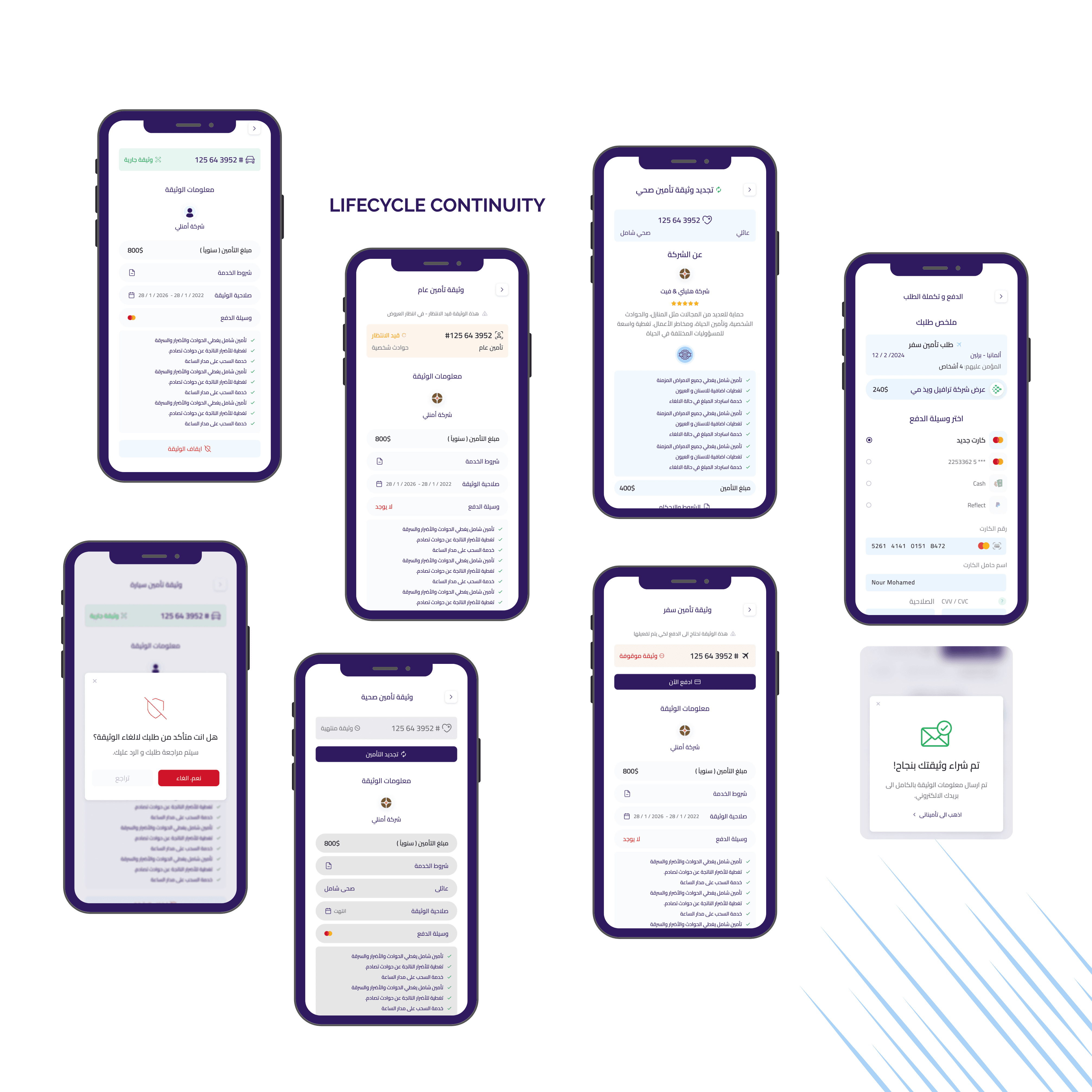
A major highlight of the app's success was the Installment Integration. In a market where annual premiums can be a heavy financial lift, the ability to pay in installments was a game-changer. I visually prioritized this through a "Pay in Installments" badge on the primary offer cards. It wasn't just a feature; it was a business driver that opened the door for users who previously felt priced out of comprehensive coverage.
The Success State: Beyond the Payment
The journey didn't end at "Success." In the West Bank, having proof of insurance is critical for checkpoints and legal stops. The final screen was designed for utility: immediate access to the policy number and a "Save to Device" feature for terms and conditions.
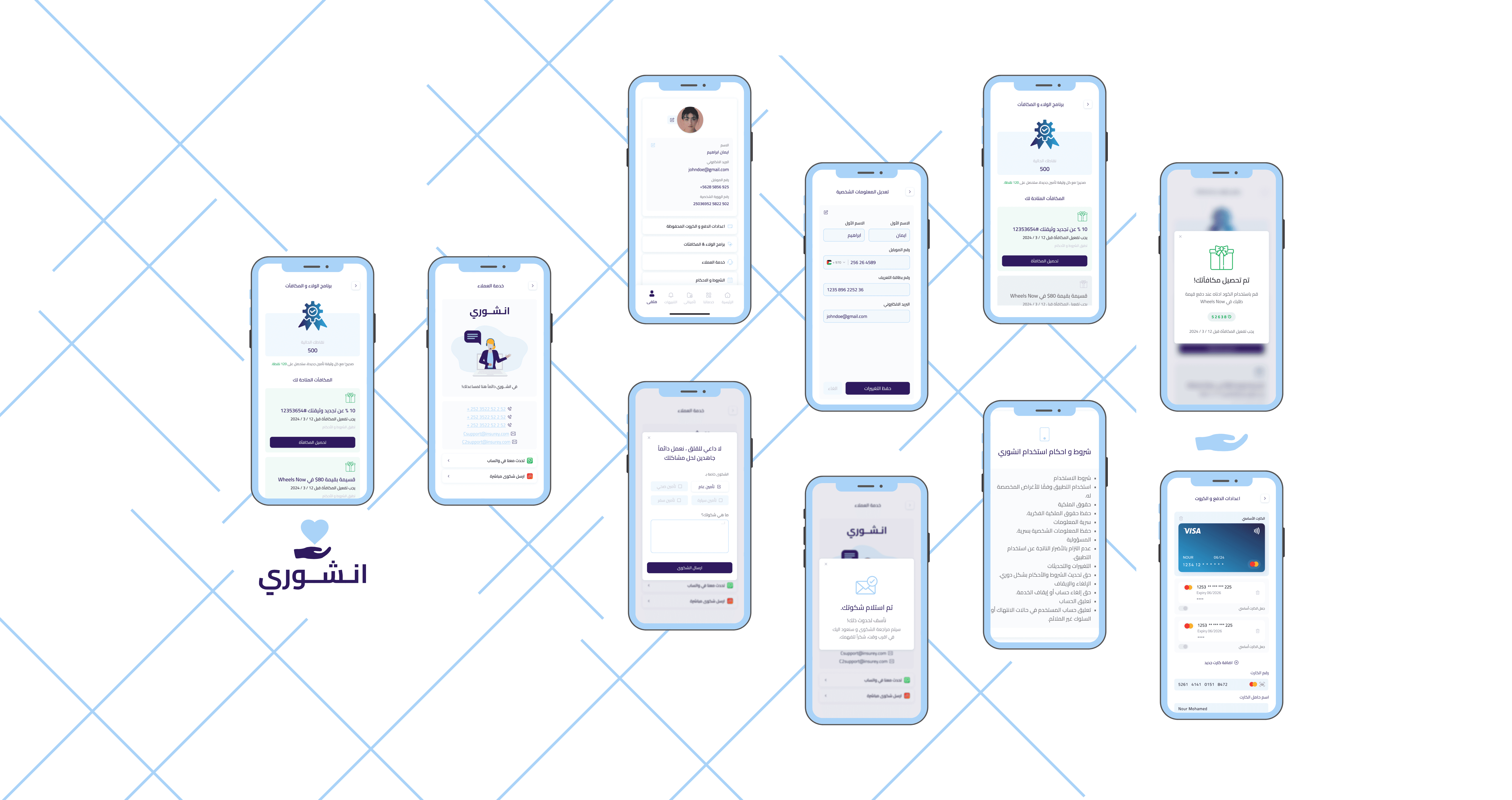
Looking back, this project was a masterclass in balancing Human Desire with Business Logic. If I were to redesign the claims process today, I would move from the current "Contact Us" model toward a fully personalized, AI-assisted tracking system. This case study stands as a testament to the fact that Product design isn't just about making things look good, it's about advocating for the systems that make products work in the real world and are used by people who def need them!